
 Español
 عربى


Engine Mount vs Transmission Mount: Key Differences for BMW and Mercedes
Content
If the whole car shakes at idle in gear and then smooths out the moment you touch the throttle, the fault is usually one mount rather than the other. Engine mounts and transmission mounts are both rubber and steel parts that tie the powertrain to the chassis, but they sit in different places, carry different loads, and fail with a different signature. Making the right call on the first lift saves an extra diagnosis, an unnecessary part, and a comeback.
The short version: engine mounts bolt to the engine brackets on the sides or front of the bay and absorb the full torque reaction from the crankshaft, so they are built for high shear load and are often fluid-filled. Transmission mounts sit under the tail of the gearbox on a crossmember, mostly steady the driveline, and are usually solid rubber blocks with a steel carrier. Fit the wrong one and the vibration stays exactly where it was.
The Short Answer: Two Mounts, Two Duties
Before the detail, here is the comparison most workshops keep in mind.
- Location: engine mounts sit on the left and right engine brackets, sometimes with an extra front or torque strut mount; a transmission mount sits at the rear of the gearbox on a crossmember.
- Primary load: engine mounts carry the engine weight plus torque reaction in shear and compression; transmission mounts carry less vertical load and mainly resist fore and aft movement during shifts.
- Construction: hydraulic, fluid-filled cores are common on engine mounts; solid rubber bonded to a steel bracket is the norm on transmission mounts.
- Failure pattern: a failed engine mount shows as idle shake, clunks under acceleration and fluid weeping; a failed transmission mount shows as a driveline clunk on gear change and vibration through the tunnel.
- Replacement logic: engine mounts are normally replaced in pairs on the same axle; the transmission mount is replaced on its own.
Rule of thumb: shake at idle in Drive, felt through the steering wheel and dashboard, points to the engine mounts first. A single thud when the driveline takes up load, felt through the floor and seat, points to the transmission mount first.
Where Each Mount Sits and What It Carries
An engine mount on a BMW E46 or a Mercedes W204 is a thick block or cylindrical bushing bolted to a cast aluminium bracket on the block and to a matching bracket on the subframe or chassis rail. Left and right are not identical parts: they differ in height, bolt spacing and sometimes stiffness, because torque reaction pushes one side into compression and pulls the other into tension.
The load is not small. A 3.0 litre turbocharged diesel can produce 500 Nm or more at the crank, and in first or second gear that becomes several kilo-newtons of shear force at each mount. The part still has to hold the engine within a few millimetres of its designed position while isolating the 20 to 30 Hz shake the driver feels at idle.
A transmission mount works in a different regime. It sits under the rear extension housing of the gearbox, usually on a bolt-on crossmember, and its job is to stop the driveline pitching fore and aft when torque is applied and released. Vertical load is modest and heat soak is lower, which is why the part is often a simple rubber block with a bonded inner sleeve.
 BMW E60/E61/E63/E64 Engine Mount 22116761089Direct-fit rubber-and-steel engine mount for BMW 5 and 6 Series, suited to N52 and M54 petrol variants, restoring powertrain stability and vibration isolation.View Product →
Construction: Rubber, Hydraulic and Why It Matters When Sourcing
On premium platforms the engine mount is often hydraulic. Two fluid chambers separated by a decoupler plate force glycol through a narrow channel as the engine moves, and the inertia of that fluid is tuned to cancel a specific vibration band. This is why a hydraulic mount can feel soft at idle and firm under hard acceleration at the same time.
Transmission mounts rarely use that design. The excitations at the gearbox tail are different and the vertical load is lower, so a solid rubber block gives enough isolation at lower cost. Compression moulded natural rubber around 55 to 65 Shore A is typical for original equipment, while performance replacements often run 70 to 80 Shore A and trade comfort for reduced driveline movement.
The sourcing point follows from this: a hydraulic engine mount is a tuned assembly, not a rubber pad. Two suppliers can quote the same OE reference and still deliver different idle behaviour, because fluid volume, channel length and decoupler stiffness vary. Ask for the hardness figure, the metal to rubber bond specification and the salt spray hours, not only the piece price.
 Mercedes-Benz 4Matic Hydraulic Engine Mount 2052406000Hydraulic rubber-metal mount for C-Class, E-Class and CLS 4Matic models, covering M274 and M264 engines while restoring low-frequency vibration damping.View Product →
Failure Symptoms That Point to One or the Other
Engine mount symptoms
- Vibration at idle in Drive or Reverse that fades once the car is moving.
- Visible engine rock when the throttle is blipped with the bonnet open, more than about 10 mm of travel being a warning sign.
- A single heavy clunk under hard acceleration or when the throttle is released.
- Exhaust or heat shield rattle caused by the engine dropping onto the subframe.
- Dark fluid trails or a collapsed, polished rubber face on a hydraulic mount.
Transmission mount symptoms
- A distinct thud when the driveline takes up load, especially on the coast to power transition.
- Vibration felt through the floor, tunnel and seat rather than through the steering wheel.
- Gear lever or shifter movement during acceleration and overrun.
- Driveline vibration that changes with road speed and often peaks between 60 and 90 km/h.
- A sheared inner sleeve, or a rubber base that has separated from its steel plate.
On cars past ten years old both mounts are often tired together, and a worn engine mount accelerates wear in the transmission mount because the gearbox tail moves further than it was designed to. Heat, oil leaks and hard launches shorten mount life well below the usual 80,000 to 160,000 km window.
How to Test Each Mount in the Bay
- Cold visual check. Look for cracks deeper than about 3 mm, rubber separating from the steel bond, a mount that has sagged off centre, and wet patches around a hydraulic body.
- Brake torque test. With the handbrake on and the bonnet open, load the driveline briefly in Drive and Reverse, or slip the clutch for no more than two seconds on a manual. Engine movement beyond 10 to 15 mm at the mount points to a failed engine mount.
- Pry bar test. With the engine off, apply moderate leverage between bracket and mount. Free travel greater than about 5 mm usually means internal separation, and a spongy feel on a hydraulic unit means the fluid chamber has failed.
- Transmission mount removal. Support the gearbox with a jack, unbolt the crossmember, and lift the mount clear. Check for a sheared inner sleeve, a collapsed rubber base and elongated bolt holes.
- Related parts. Inspect the driveshaft flex disc, centre support bearing, exhaust hangers and bump stops. A dry, cracked flex disc can produce the same thud as a failed transmission mount, so the diagnosis should cover the whole driveline.
If the complaint overlaps with chassis noise rather than powertrain shake, a wider look at the suspension is worth the ten minutes, because worn bushes produce a similar low speed knock. Known symptom patterns for worn Mercedes-Benz and BMW suspension bushings are a useful cross-check before parts are ordered.
Matching Parts, Torque and Installation Traps
Fitment is decided by chassis code and OE reference, not by brand alone. A mount listed for a BMW F10 5 Series will not fit a G30, and a Mercedes W204 engine mount will not bolt into a W205 even though the two engines look similar in the bay. Left and right engine mounts carry separate part numbers on most platforms, and a hydraulic version cannot be substituted for a solid one without changing the idle character of the car.
Installation errors cause a large share of repeat failures.
- Replace engine mounts in pairs on the same axle; one new mount next to a ten year old one loads the new part unevenly.
- Tighten mount to bracket bolts to roughly 40 to 60 Nm and mount to body bolts to roughly 60 to 80 Nm, following the manufacturer figure where one is published.
- Snug the bolts first, then tighten them with the car at ride height. Tightening on a two post lift with the suspension hanging pre-loads the rubber and shortens its life.
- Do not reuse stretch bolts or self locking nuts where the manufacturer specifies replacement.
- Check the alignment of the gearbox tail after fitting a transmission mount; a misaligned crossmember pulls the new rubber sideways from day one.
 BMW 3/5/7 Series Transmission Mount 23711130205Cylindrical rubber transmission mount covering E36, E46, E34, E39, E32 and E38 models, with dual sizing and M8 stud for mixed BMW fleets.View Product →
For workshops and distributors ordering in volume, the criteria that show up in a warranty claim are the practical ones: hardness consistency between batches, bond strength at the metal insert, corrosion protection on the bracket, and traceable cross references so each part can be matched to the correct chassis without guesswork.
FAQ
Q1: Can I drive with a broken transmission mount?
Short distances at low speed are usually survivable, but the gearbox is moving further than designed, which loads the driveshaft flex disc, the centre support bearing and the gear linkage. Continued driving turns a single part repair into a driveline repair, so the mount should be replaced promptly.
Q2: Do engine mounts and transmission mounts wear at the same rate?
No. Engine mounts sit closer to exhaust heat, absorb more torque reaction and are often hydraulic, so they generally fail first. A transmission mount usually lasts longer, but it wears faster once an engine mount has failed and the driveline starts moving outside its normal range.
Q3: Does a stiffer mount improve performance?
A stiffer mount reduces engine and driveline movement, which sharpens throttle response in a manual car, but it also transmits more noise and vibration into the cabin. For a daily driven BMW or Mercedes, an original equipment hardness rating is usually the better compromise.
Q4: How can I tell a hydraulic engine mount from a solid one before buying?
The hydraulic type has a sealed body, usually with a visible seam or diaphragm and a fluid chamber inside, and the housing is taller and heavier. A solid mount is a rubber block bonded to steel with no fluid cavity. The OE number and the chassis code remain the reliable confirmation.
Engine mounts and transmission mounts end up in the same conversation because they fail with similar complaints, yet they are different parts doing different work at different points in the driveline. Diagnose by location and load path first, confirm with a brake torque test and a visual check, then match the replacement to the chassis code and the original mount type. That sequence keeps the repair to one lift and one invoice.
When a parts list has to cover several platforms at once, a supplier working from OE cross references and chassis codes takes most of the guesswork out of ordering, and the service and support process behind a parts programme matters as much as the catalogue itself.
Recommended Products
-


Mercedes-Benz CLS 350 EQ Boost 4-matic Automatic Transmission Mount
-

Mercedes-Benz GL-Class Transmission Vibration Damping Mount
-

Mercedes-Benz CLS63 AMG / S500 4MATIC Transmission Mount
-
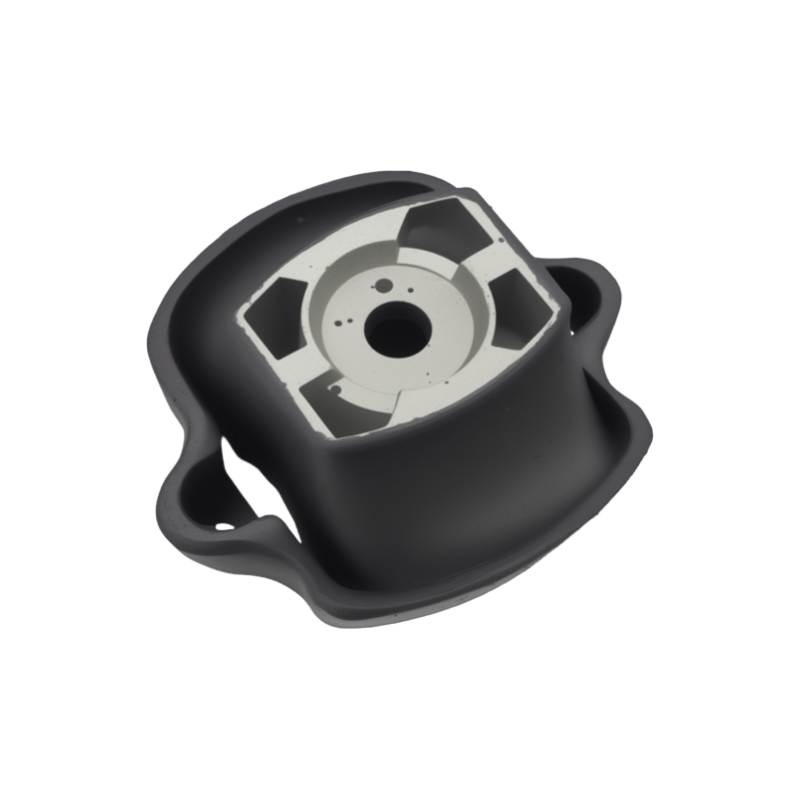
Mercedes-Benz S-Class (W126) Engine Mount Shock Absorber Pad
-
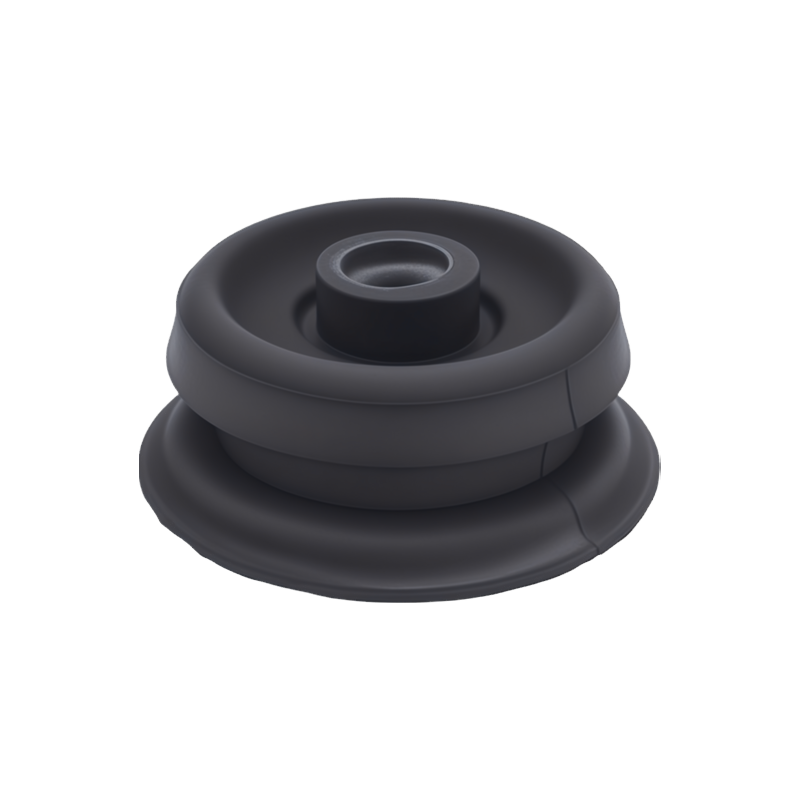
Mercedes-Benz Sprinter 2-t/3-t Series Shock Absorber Top Mount
-
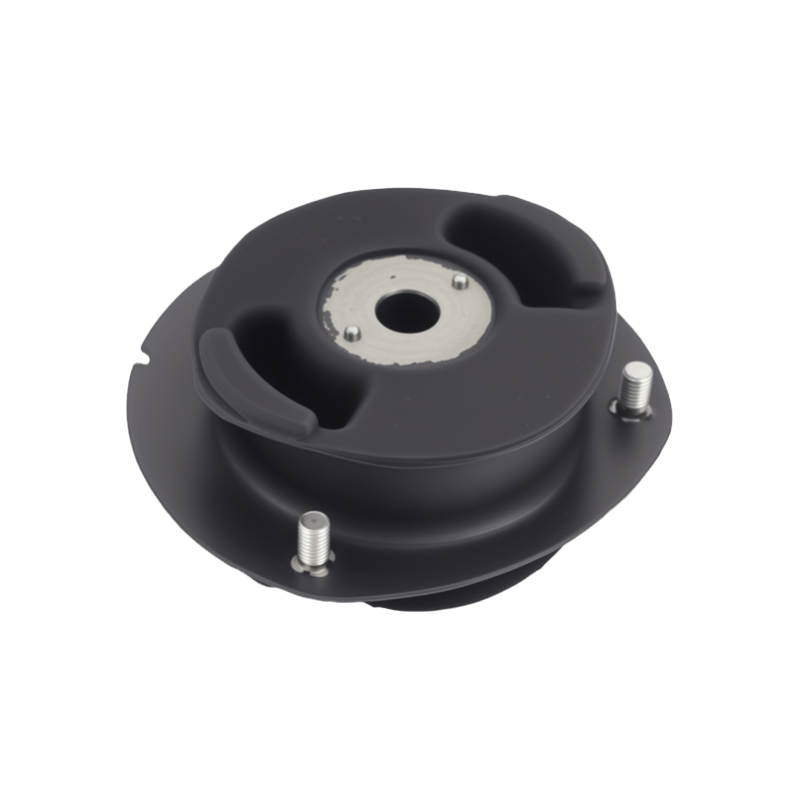
Mercedes-Benz W201 Front Strut Mount
Recommended News
-
Upgrading Your BMW & Mercedes-Benz Suspension: Why Strut Mounts and Bushings Matter for Handling
-
A Comprehensive Sourcing Guide for Mercedes-Benz and BMW Suspension Bushings and Strut Mounts
-
The Role of Strut Mounts in Mercedes-Benz and BMW: Common Failure Signs and Solutions
-
Symptoms of Worn Mercedes-Benz & BMW Suspension Bushings: When Is It Time for a Replacement?
- Address : Yihuang line, Ningguo Economic and Technological Development Zone. Xuancheng City,Anhui Province.
- Fax : +86 13906874997
- Tel: +86-15856310524
- Email: [email protected]
Copyright © ANHUI LIANJUN RUBBER TECHNOLOGY CO., LTD.
All Rights Reserved.
Wholesale Automotive Suspension Parts Suppliers
