
 Español
 عربى
عربى

Upgrading Your BMW & Mercedes-Benz Suspension: Why Strut Mounts and Bushings Matter for Handling
Content
- 1 The Overlooked Components Behind Every Precise Turn
- 2 How Strut Mounts Preserve Steering Feedback
- 3 Suspension Bushings and Load Path Control
- 4 Comparing Failure Symptoms: Mounts vs Bushings
- 5 Diagnostic Flow for Suspension Noise and Play
- 6 Wear Progression and Inspection Timing
- 7 Material and Design Considerations for Long-Term Durability
- 8 Practical Guidance for Component Replacement
- 9 Frequently Asked Questions
- 9.0.1 Q1: How can I tell whether a noise is coming from the strut mount or a bushing?
- 9.0.2 Q2: Does worn suspension bushing damage cause uneven tire wear?
- 9.0.3 Q3: Is it necessary to replace strut mounts and bushings at the same time?
- 9.0.4 Q4: Why does the steering wheel sit off-center after a strut mount fails?
- 9.0.5 Q5: How soon after replacement should an alignment be performed?
The Overlooked Components Behind Every Precise Turn
When a car starts to feel vague through a corner, most owners look first at tires and wheel alignment. Yet a large share of steering complaints trace back to two parts that rarely get inspected on their own: the strut mounts at the top of the front suspension and the rubber or polyurethane bushings that locate the control arms and subframe. These components do not fail loudly. They soften gradually, and by the time a driver notices, the car has already been carrying a small but constant error in how forces travel from the road to the chassis.
Shop data collected across independent service centers shows a consistent pattern: when technicians trace a customer complaint of looseness, clunking, or wandering steering back to its actual origin, worn bushings and strut mounts account for the majority of confirmed causes, ahead of alignment drift or tire wear alone.
How Strut Mounts Preserve Steering Feedback
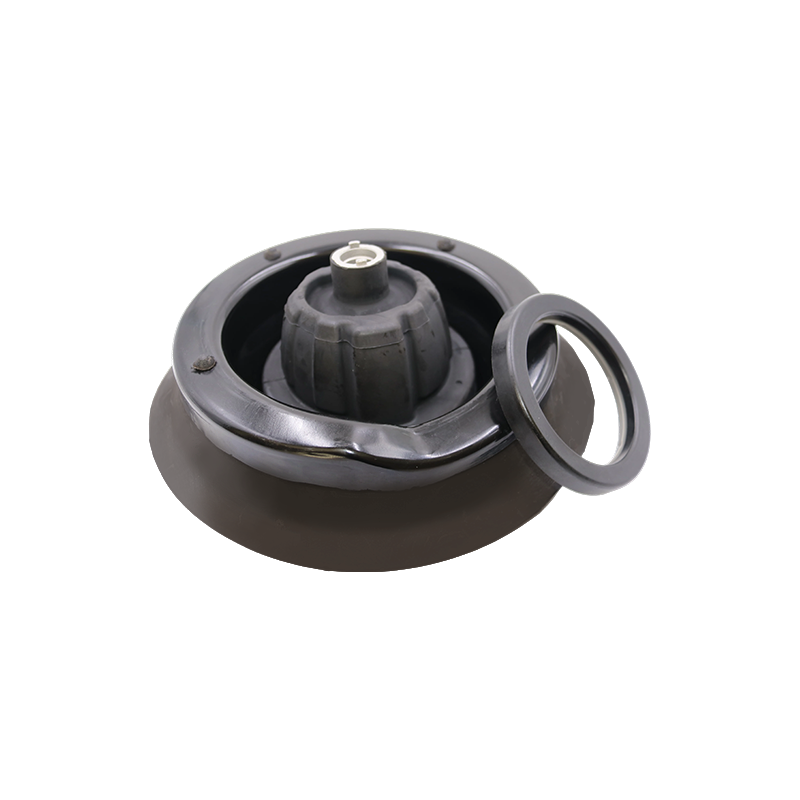
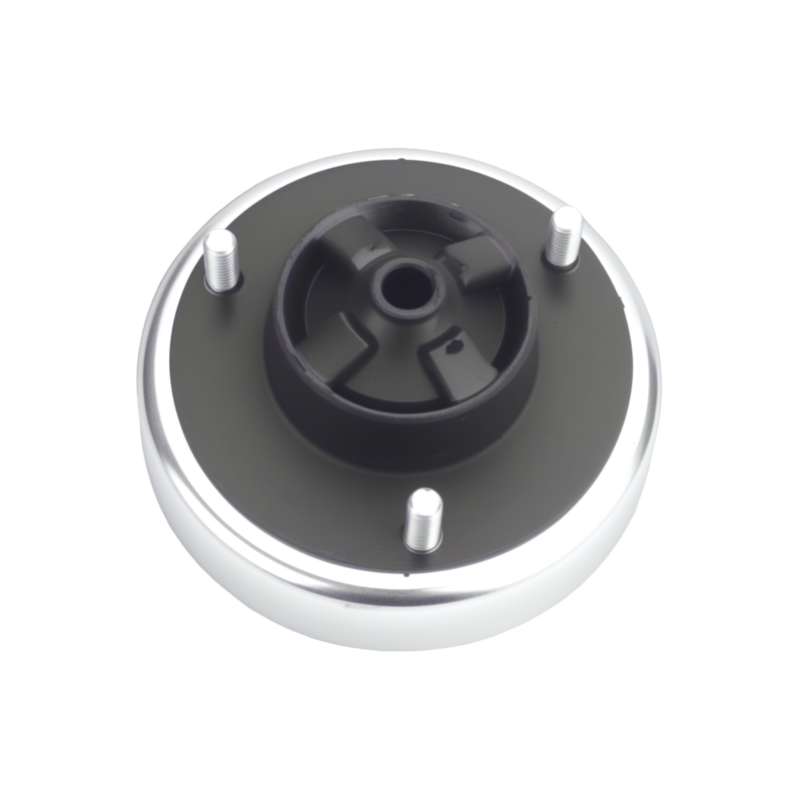
A strut mount sits between the top of the strut assembly and the body structure. It carries three jobs at once: supporting the weight transferred through the spring, allowing the strut to rotate slightly as the wheel steers, and isolating road vibration from the cabin. Inside most mounts is a bearing plate paired with a rubber or hybrid isolator. When that isolator hardens or separates, the bearing can bind, and steering effort becomes uneven from side to side.
Drivers usually describe early wear as a faint knock over small bumps, most noticeable at low speed on rough pavement. As wear progresses, the steering wheel may sit slightly off-center even after a proper alignment, because the top of the strut is no longer holding its designed angle. A correctly functioning bmw strut mount keeps that geometry stable across the full range of suspension travel, which is why replacement is usually paired with an alignment check rather than done in isolation.
- Knocking or tapping over sharp bumps at low speed
- Steering wheel that does not return to center smoothly
- Uneven tire wear across the front axle despite recent alignment
Suspension Bushings and Load Path Control
Bushings do a quieter job than strut mounts, but their influence on handling is arguably larger. Every control arm, sway bar link, and subframe mount relies on a bushing to control how much a component can flex before it transmits force directly into metal contact. A fresh bushing keeps that flex within a narrow, predictable range. As the rubber compound ages, it loses stiffness unevenly, which lets the control arm shift slightly under braking or cornering load. The car still turns, but the response arrives a beat later than it should, and body roll increases even though spring rates have not changed.
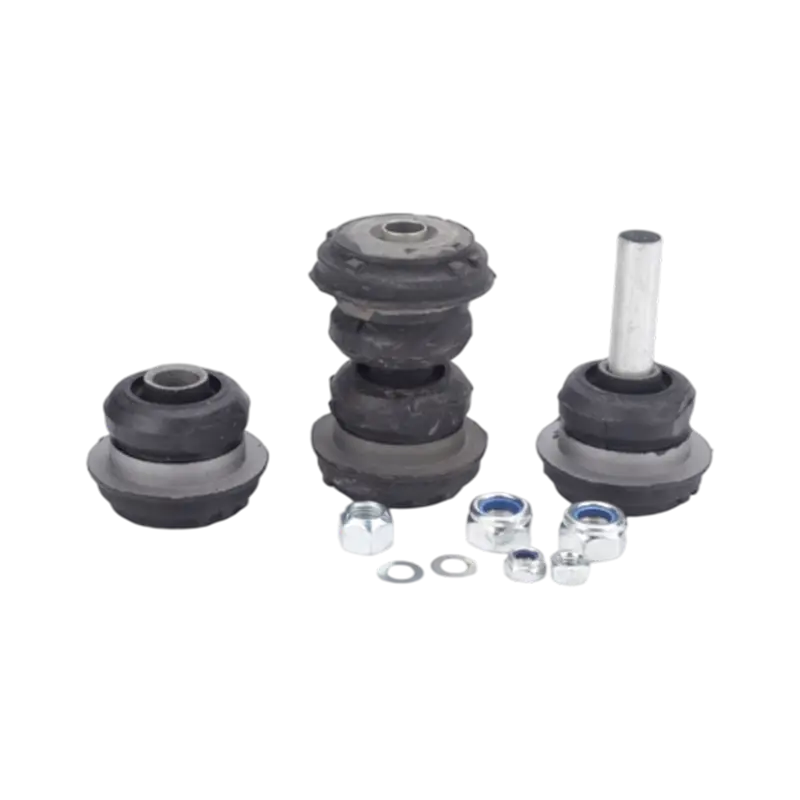
This delayed response is the most common complaint linked to bushing wear: a car that used to feel tied down through a sweeping corner starts to feel like it is following the driver's input rather than reacting to it instantly. Because bushings are pressed into arms that are otherwise still serviceable, many owners choose a full mercedes-benz suspension bushing set as part of a front-end refresh rather than isolating a single failed piece, since neighboring bushings are usually close behind in wear stage.
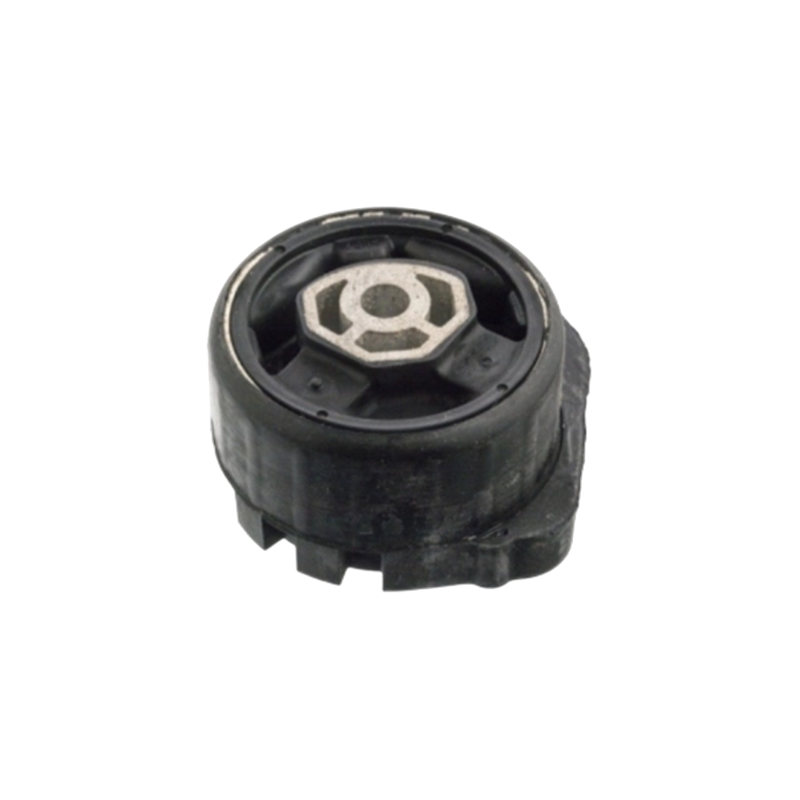
The same reasoning applies across platforms: a correctly specified bmw suspension bushing restores the intended pivot resistance so that cornering load is absorbed progressively instead of transmitted as a sudden shift in the chassis.
Comparing Failure Symptoms: Mounts vs Bushings
Because both components sit in the same general area of the front end, owners often assume any front-end noise has a single cause. In practice, strut mount wear and bushing wear produce distinct symptom patterns, and separating them speeds up an accurate diagnosis considerably.
Strut mount wear leans toward noise and vibration issues that are sharpest over abrupt bumps, while bushing wear leans toward steering slop and ride harshness that build up gradually and are easier to miss during a short test drive.
Diagnostic Flow for Suspension Noise and Play
A methodical inspection sequence prevents the common mistake of replacing the first suspicious part instead of the part actually causing the complaint. Most experienced technicians follow a version of the same five-step sequence, moving from the least invasive check to the most conclusive one before ordering parts.
Wear Progression and Inspection Timing
Mileage-Based Wear Curves
Neither strut mounts nor bushings fail on a fixed schedule, but both follow a recognizable curve once wear begins. Early mileage brings almost no measurable play. Past the midpoint of a typical service life, degradation accelerates, and the two components separate in behavior: bushings tend to build play more steadily, while strut mounts often hold steady before a sharper late-stage drop as the internal bearing loses lubrication.
Recommended Inspection Frequency by Vehicle Age
Because wear accelerates rather than progressing in a straight line, inspection intervals should tighten as a car ages rather than staying fixed. A car in its first three years rarely needs a dedicated check, while a car past nine years benefits from a suspension inspection at nearly every service visit.
Material and Design Considerations for Long-Term Durability
Not all replacement bushings and mounts are built to the same compound or tolerance, and the material choice affects both comfort and precision. Standard rubber compounds prioritize quiet operation and progressive give, which suits daily commuting. Firmer compounds reduce deflection under load, which sharpens turn-in but transmits more road noise into the cabin. Strut mounts follow a similar tradeoff between isolation and bearing precision.
| Component Type | Damping Character | Typical Service Life | Noise Isolation |
|---|---|---|---|
| Standard rubber bushing | Progressive, soft-edged | 60,000 to 90,000 mi | High |
| Firm-compound bushing | Direct, minimal flex | 80,000 to 120,000 mi | Moderate |
| Standard elastomer strut mount | Balanced isolation | 70,000 to 100,000 mi | High |
| Reinforced bearing strut mount | Precise, low compliance | 90,000 to 130,000 mi | Moderate |
Choosing between these options depends on how the car is used day to day. A vehicle that spends most of its life on the highway benefits more from the quieter standard compound, while a car that regularly sees spirited driving or track days benefits from the reduced compliance of a firmer design, accepting a small increase in transmitted noise.
Practical Guidance for Component Replacement
Because strut mounts and bushings degrade together over similar mileage ranges, replacing them as a coordinated set during a front-end refresh usually produces a more noticeable improvement than replacing a single failed part in isolation. It also avoids a second labor visit a few months later when the neighboring, slightly-less-worn component finally gives out.
Before ordering parts, confirm the specific chassis code and suspension variant, since strut mount bearing diameter and bushing durometer both vary across trim levels and model years. After installation, a full alignment is worth doing even if the old geometry appeared correct, since new mounts and bushings often shift camber and toe slightly as they settle into their designed resting position over the first few hundred miles.
- Confirm chassis code and suspension variant before ordering parts
- Replace mounts and bushings on both sides of an axle together
- Torque fasteners with the suspension loaded at ride height, not while lifted
- Schedule a full alignment after the new components have seated
Frequently Asked Questions
Q1: How can I tell whether a noise is coming from the strut mount or a bushing?
Strut mount noise is usually a sharp knock felt through the steering wheel over abrupt bumps, while bushing wear tends to show up as a duller clunk from lower in the chassis during braking or cornering rather than over bumps alone.
Q2: Does worn suspension bushing damage cause uneven tire wear?
Yes. As a bushing loses stiffness, the control arm shifts position slightly under load, which alters camber and toe dynamically and produces wear patterns that a static alignment alone will not fully correct.
Q3: Is it necessary to replace strut mounts and bushings at the same time?
It is not strictly required, but since both wear over similar mileage ranges, replacing them together during one service visit avoids repeat labor costs and gives a more complete restoration of steering feel.
Q4: Why does the steering wheel sit off-center after a strut mount fails?
A worn mount allows the top of the strut to shift slightly from its designed angle, which changes the resting geometry of the wheel even though the alignment settings themselves have not been touched.
Q5: How soon after replacement should an alignment be performed?
An alignment should be scheduled shortly after installation, since new components can shift geometry slightly as they seat, and confirming settings once they have settled gives the most accurate long-term result.
Recommended Products
-
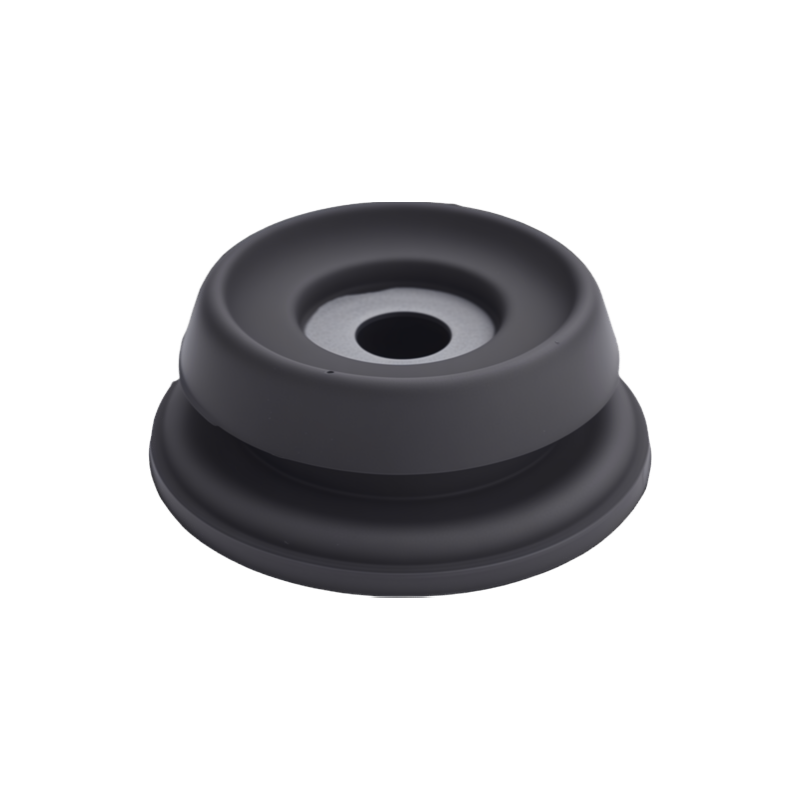


Suspension Strut Support Bearing for Mercedes-Benz 903 Series
-
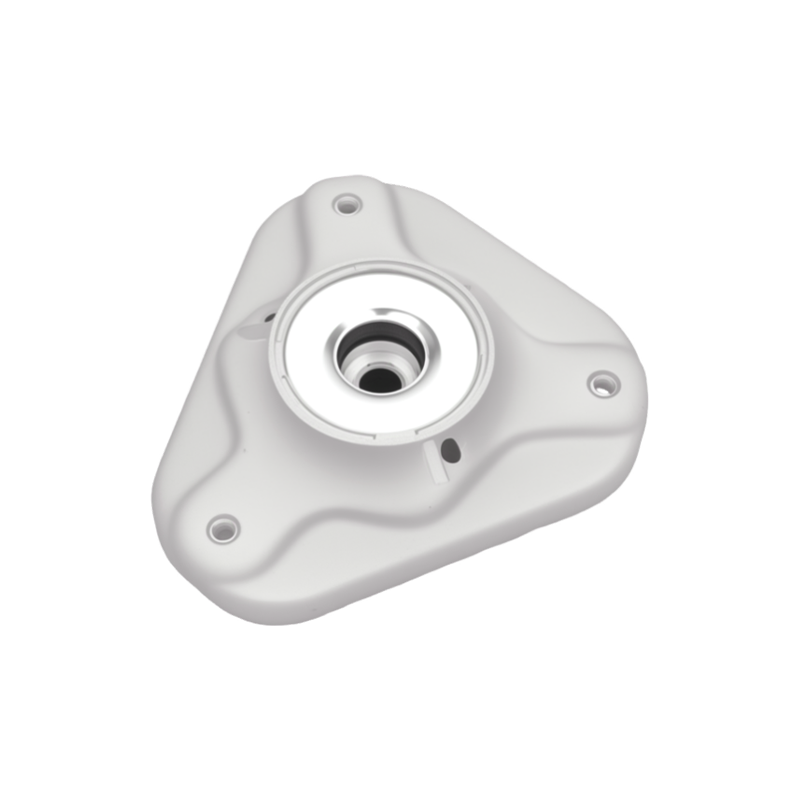
Mercedes-Benz Imported E-Class Suspension Strut Mount
-
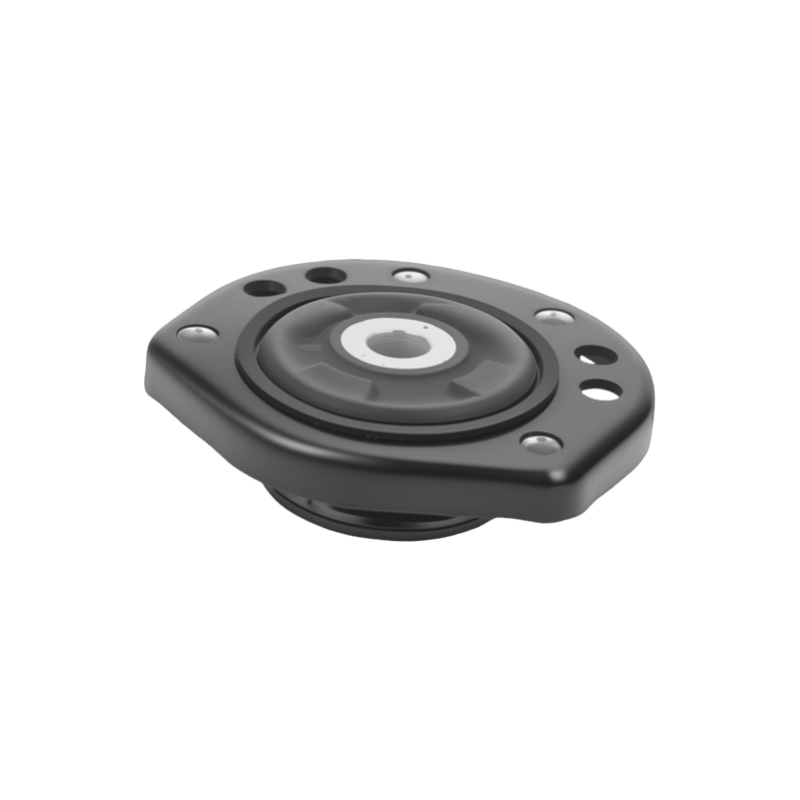
Front Suspension Strut Mount for Mercedes-Benz Sprinter
-
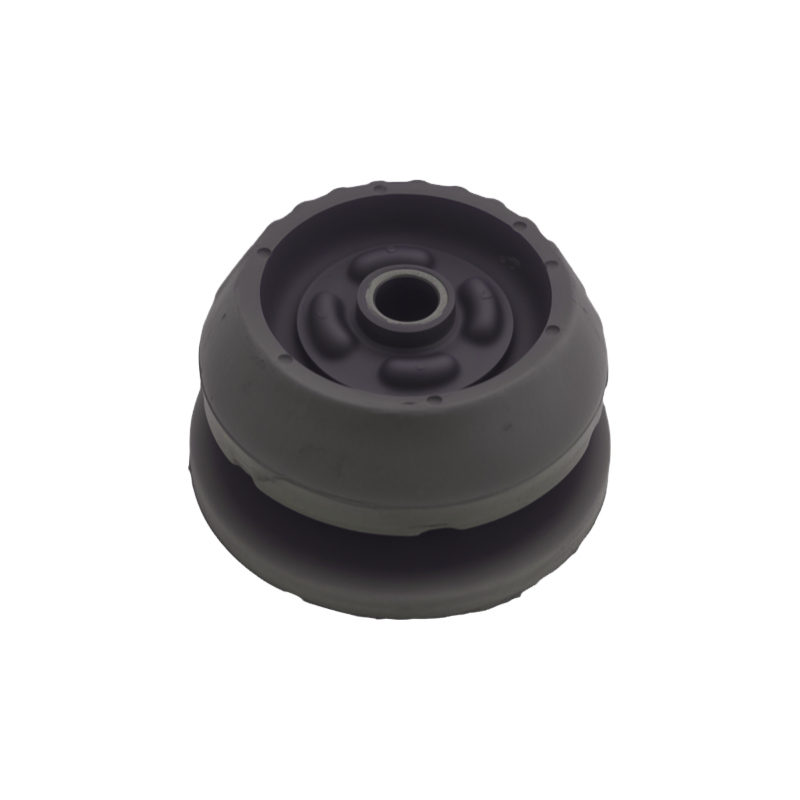
Mercedes-Benz W639 Vito Chassis Suspension Strut Mount
-
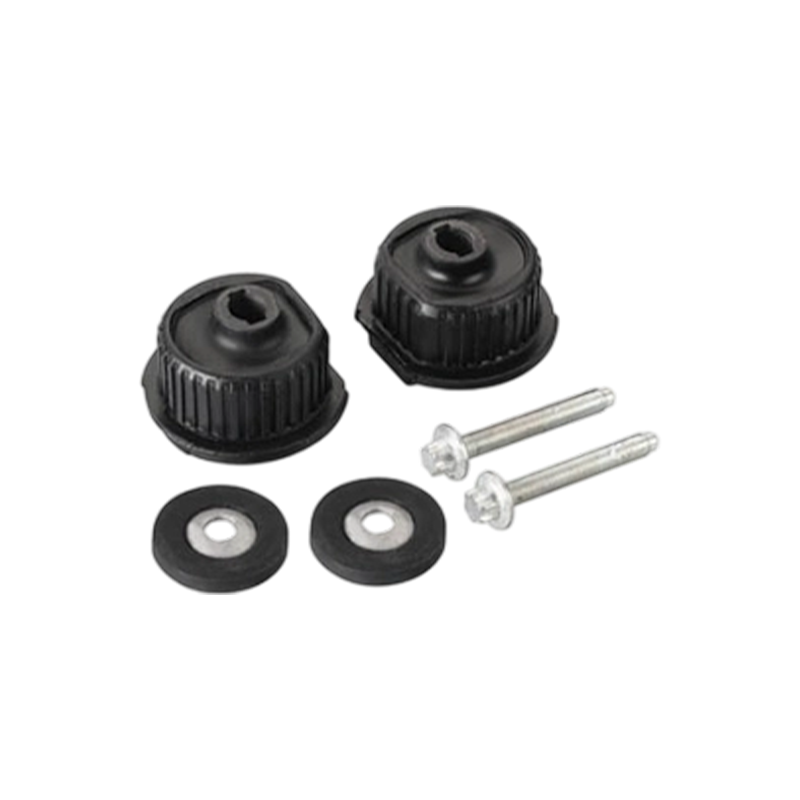
Suspension Bushing Repair Kit for Mercedes C-Class W203
-
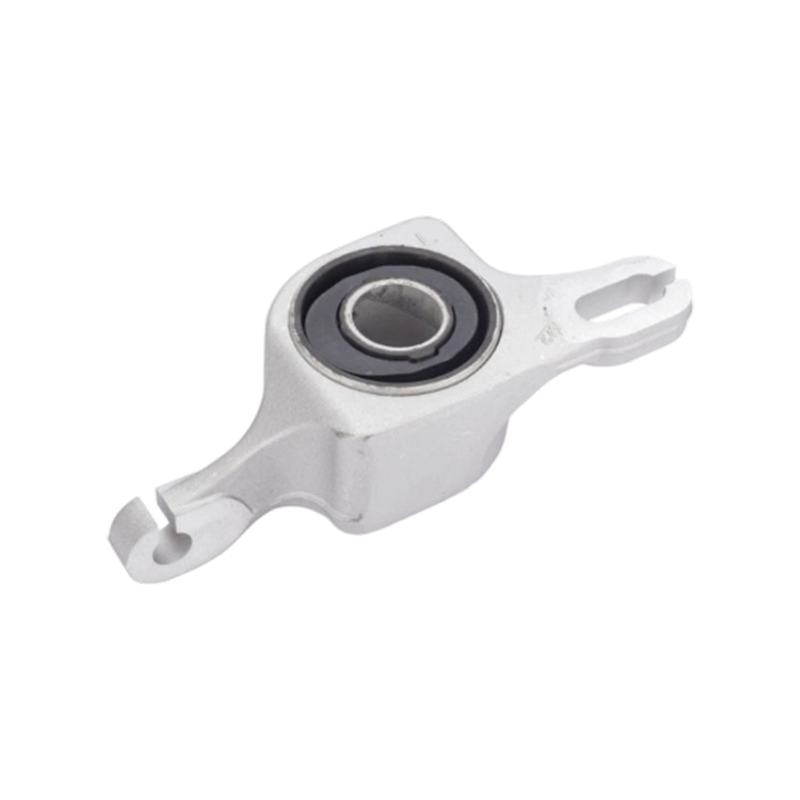
Mercedes-Benz GL ML Series Chassis Suspension Bushing
Recommended News
-
A Comprehensive Sourcing Guide for Mercedes-Benz and BMW Suspension Bushings and Strut Mounts
-
Symptoms of Worn Mercedes-Benz & BMW Suspension Bushings: When Is It Time for a Replacement?
-
The Role of Strut Mounts in Mercedes-Benz and BMW: Common Failure Signs and Solutions
-
What are the benefits of BMW chassis system?
- Address : Yihuang line, Ningguo Economic and Technological Development Zone. Xuancheng City,Anhui Province.
- Fax : +86 13906874997
- Tel: +86-15856310524
- Email: [email protected]
Copyright © ANHUI LIANJUN RUBBER TECHNOLOGY CO., LTD.
All Rights Reserved.
Wholesale Automotive Suspension Parts Suppliers
