
 Español
 عربى


Causes of Flex Disc Failure: Rubber Aging, Heat, Alignment & Install Errors
Content
- 1 What the Part Does, and Why It Is Loaded So Hard
- 2 Cause 1: Rubber Aging and Heat Cycling
- 3 Cause 2: Oil, Grease, and Chemical Attack
- 4 Cause 3: Driveline Misalignment and Worn Companion Parts
- 5 Cause 4: Installation and Torque Mistakes
- 6 Cause 5: Wrong Specification or Low-Grade Replacement
- 7 Symptoms by Failure Stage
- 8 How to Inspect a Flex Disc in Ten Minutes
- 9 Choosing a Replacement That Lasts
- 10 Frequently Asked Questions
A BMW E90 arrives with a shudder that appears between 40 and 60 km/h and fades once the car settles into a cruise. A Mercedes W210 arrives with a single heavy clunk the first time the driver touches the throttle each morning. Both cars have the same part in common: the flex disc, the rubber coupling bolted between the transmission output flange and the driveshaft. In both cases, the rubber has already started to separate.
Here is the conclusion first. Flex discs almost never fail because of one dramatic event. They fail because five ordinary stresses compound over time: rubber that has aged and heat-cycled, fluid contamination, a driveline that no longer runs true, an installation that pre-loaded the disc, and a replacement part that does not match the original specification. Repair only the visible crack and ignore the rest, and the new disc can be back in the same condition within 20,000 to 30,000 km.
Every flex disc failure on a bench tells two stories: what happened to the rubber, and what happened around it. The second story is usually the one that caused the first.
What the Part Does, and Why It Is Loaded So Hard
The flex disc, also called a guibo, Hardy disc, or rubber coupling, is a rubber-and-cord sandwich with metal sleeves at the bolt holes. It attaches to a six-bolt or three-bolt flange pattern depending on the chassis, and it performs three jobs at the same time.
- Torque transfer. Every Newton-metre the gearbox produces passes through the rubber and cord plies, including the spike that arrives with a fast downshift.
- Torsional damping. The elastic body smooths shock loads that would otherwise reach the gearbox output bearing and the differential pinion.
- Misalignment take-up. It allows a few degrees of angular offset and a small amount of axial travel, so the shaft does not need to be perfectly straight.
Because the disc is doing all three jobs at once, anything that increases angle, temperature, or chemical exposure eats directly into its fatigue life.
Cause 1: Rubber Aging and Heat Cycling
The single most common cause is time. Rubber compounds keep cross-linking and stiffening long after the car leaves the factory. As the disc hardens, it loses the flexibility it needs to absorb angle, so the same flexing concentrates in a narrower band of material until a crack opens at the edge of a bolt sleeve.
Heat accelerates everything. A disc sitting close to the exhaust or catalytic converter, on a car used mainly for short stop-start trips, can age twice as fast as one on a long-distance cruiser. Ozone and sunlight work from the outside, which is why fine surface crazing on an older disc is a normal finding rather than an automatic failure.
The same fatigue mechanism is explained in more detail in how rubber shock absorbers work, and it applies to every rubber-metal component in the driveline.
Cause 2: Oil, Grease, and Chemical Attack
Rubber and hydrocarbon fluid do not coexist well. A weeping transmission output seal, a rear main seal leak, or an over-enthusiastic spray of brake cleaner during the last service will soften the compound. The disc swells slightly, its durometer drops, and the cord plies begin to move against each other. From the outside it may look intact; inside, the bond between rubber and cord is already failing.
The practical signs are easy to read: a greasy, glossy sheen on the rubber, a disc that feels unusually soft when pressed with a screwdriver, or black residue around the bolt sleeves. If you find contamination, fix the leak before the disc, otherwise the replacement will follow exactly the same path.
Cause 3: Driveline Misalignment and Worn Companion Parts
This is the cause most often missed. The flex disc is one link in a chain that includes the transmission mount, the engine mounts, the center support bearing, the universal joints, and the differential mount. When any of those sag or collapse, the shaft angle changes and the disc has to flex further on every rotation.
A center support bearing with a collapsed rubber isolator is the classic example. The shaft drops a few millimetres, the working angle at the flex disc increases, and the disc absorbs the difference. The driver notices it as a low-frequency drone at 80 to 100 km/h, or a vibration that comes and goes with load. Replacing the flex disc alone will not fix that.
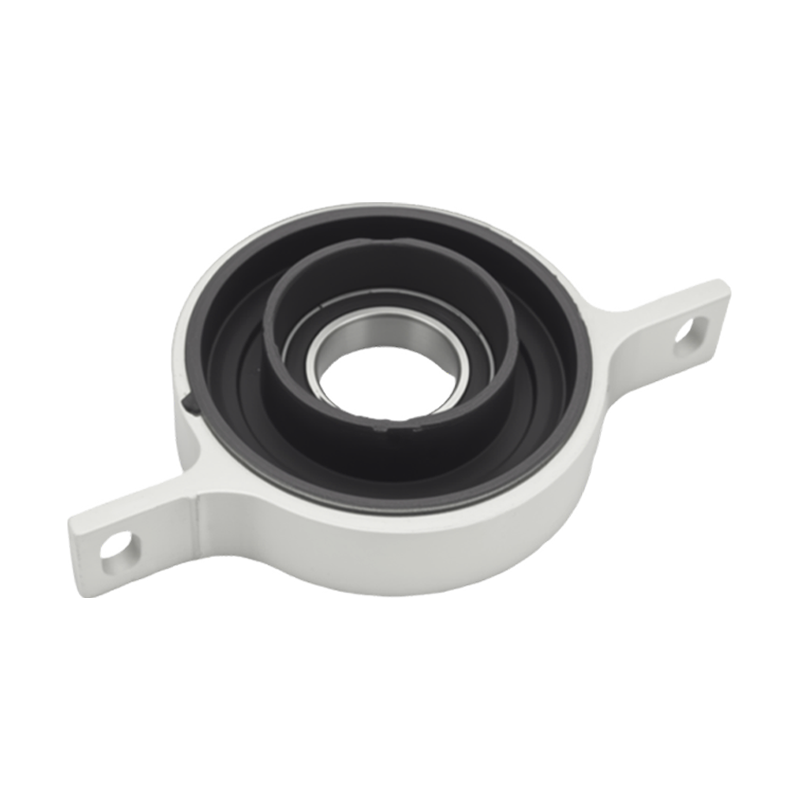 BMW E90 Driveshaft Center Support Bearing 26127526632For BMW E90 and related models, this center support bearing uses an aluminum frame and rubber isolator to damp driveshaft vibration and reduce noise.View Product →
Before ordering a disc, check four things: transmission mount sag, engine mount collapse, driveshaft runout, and play in the universal joints or the sliding spline. On older BMW and Mercedes chassis, a shaft that was bent or twisted in an earlier collision repair will also destroy a new disc quickly.
Cause 4: Installation and Torque Mistakes
A correctly specified disc can still fail within a few thousand kilometres if it is installed wrong. The mistakes that show up most often in warranty returns:
- Impact gun on the bolts. Over-torquing crushes the metal sleeves and puts the rubber into permanent compression before the car moves.
- Wrong tightening sequence. Bolts should be drawn up evenly in a cross pattern so the disc sits flat against the flange.
- Reusing stretch bolts. Many factory kits specify new bolts, nuts, and washers because the originals have already yielded.
- Final torque at full droop. If the driveline hangs at full extension when the bolts are tightened, the disc is pre-loaded the moment the car sits on its wheels.
- Prying the shaft. Levering the driveshaft to line up bolt holes distorts the flange and creates runout.
Torque values vary by model and bolt size, typically in the 40 to 60 Nm range for M10 and M12 hardware. Always take the figure from chassis-specific workshop data rather than a general rule of thumb.
Cause 5: Wrong Specification or Low-Grade Replacement
Not every flex disc on the shelf is the same part. Two discs can share a bolt pattern and an outer diameter while differing in rubber durometer, cord layup, sleeve length, and the amount of reinforcement around each hole. A disc that is too soft will flex further and overheat; one that is too hard transmits shock load straight into the gearbox output bearing.
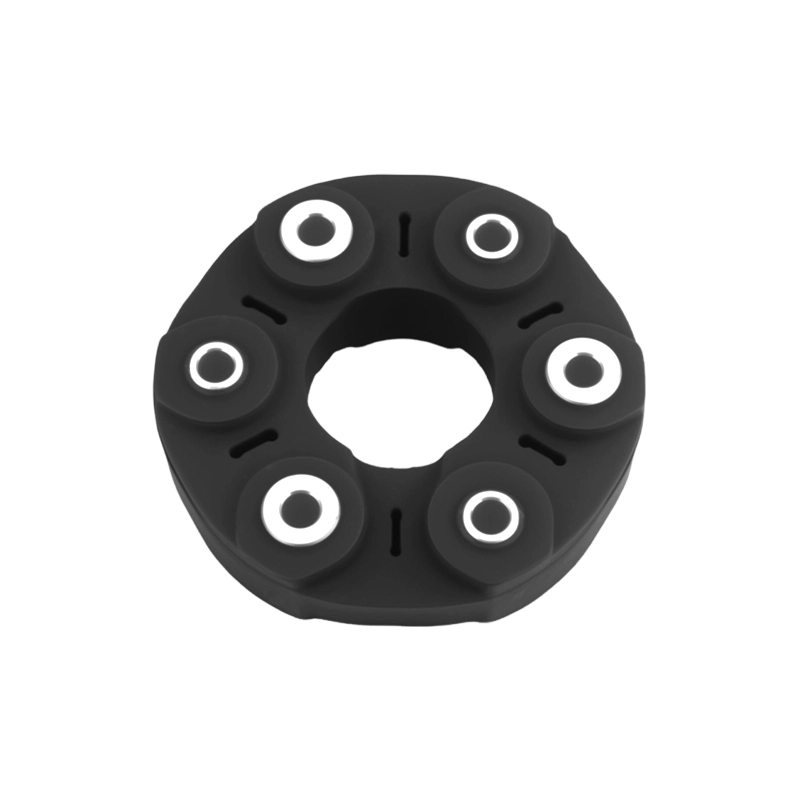 BMW 3 Series and 5 Series Driveshaft Flex DiscHigh-strength rubber flex disc for BMW E90 and E60 applications, sized 140 x 105 x 56 x 35 mm to absorb torque and damp vibration.View Product →
When comparing options, ask for durometer and reinforcement detail, not just dimensions. A disc that matches the original hardness and uses the same cord orientation will behave like the factory part. A generic equivalent with a thinner rubber section rarely reaches the same service interval.
Symptoms by Failure Stage
Flex disc damage progresses in a fairly predictable order. The table below maps what the driver reports to what the part looks like once it is on the bench.
| Stage | Driver complaint | Condition on the bench |
|---|---|---|
| Early | Faint shudder at 40 to 60 km/h under light load | Hairline surface crazing, cracks under 1 mm, rubber still supple |
| Moderate | Clunk on throttle tip-in, mild whine at motorway speed | Cracks reaching the cord ply, glazed and hardened rubber |
| Advanced | Continuous drone, vibration through the floor and gear lever | Missing rubber sections, exposed cord, distorted bolt sleeves |
| Failure | Loud bang, followed by loss of drive | Disc separated, sheared bolts, possible flange damage |
How to Inspect a Flex Disc in Ten Minutes
Step one: visual check on the lift
- Look at the disc from both sides, rotating the shaft by hand to expose every bolt position.
- Measure crack depth against the cord ply. Cracks that stop inside the rubber are survivable; cracks that reach white cord are not.
- Check for polished, glazed rubber around each sleeve, which indicates the disc has been slipping against the flange.
- Wipe the surface and look for fluid residue, then trace it back to the seal it came from.
Step two: load check with a pry bar
With the transmission in neutral, apply gentle leverage between the shaft and the flange. Movement beyond a few millimetres, or a clicking sound from the sleeves, points to a disc that has lost its structural integrity. While the bar is in hand, check the center support bearing and the transmission mount for the same kind of play. A flex disc that is replaced on a driveline with a soft mount will come back.
Choosing a Replacement That Lasts
Once the disc is off, the decision is about matching original behaviour rather than finding the lowest price. Discs supplied as a kit with new bolts, nuts, and washers remove the temptation to reuse stretched hardware, and a kit that lists the chassis code keeps the durometer and sleeve length in the correct range.
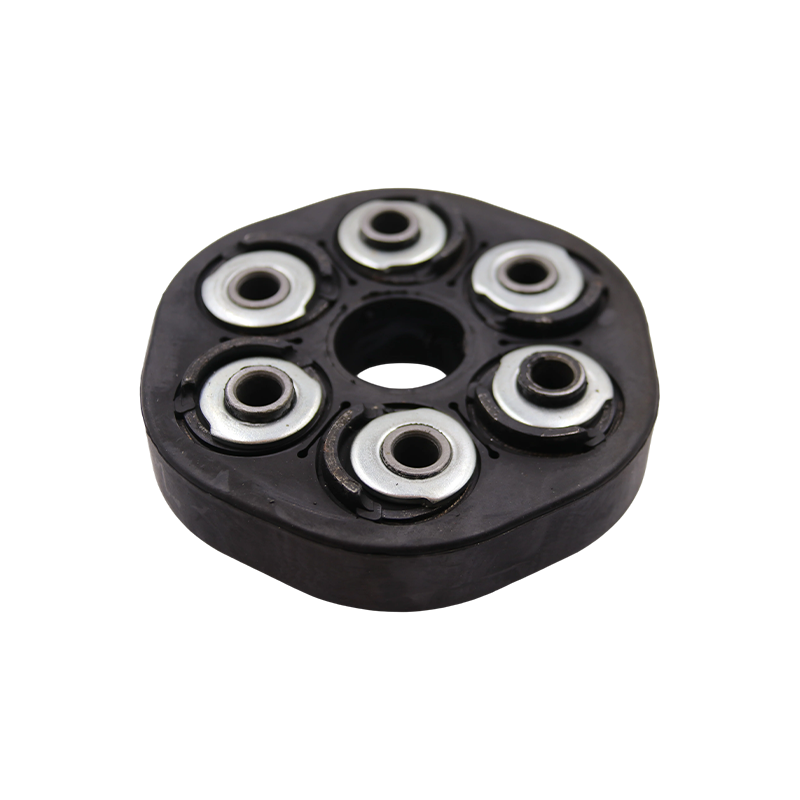 Mercedes-Benz W210 S202 Driveshaft Flex Disc KitA Mercedes-Benz W210/S202 flex disc kit with OE 2014100715, precision-machined to damp engine and drivetrain vibration during long-term use.View Product →
Bolts includedChassis specificOE-matched durometerRubber-to-metal bonding
For workshops buying in volume, the sensible approach is to stock the flex disc together with the center support bearing and the transmission mount for the same chassis, so a complete driveline repair is possible in one visit. Samples can be requested before committing to a batch, and the technical details behind each part are covered in our service and support process.
Frequently Asked Questions
Q1: How long should a flex disc last?
On a Mercedes or BMW used in normal mixed driving, expect 6 to 12 years or roughly 80,000 to 120,000 km. Cars used mainly for short city trips, or with an exhaust leak close to the disc, often need one considerably earlier.
Q2: Can I keep driving with a cracked flex disc?
Only if the cracks stop inside the rubber and there is no vibration. Once cord is visible, or the disc shows missing material, the part can separate without warning and leave the car without drive. At that stage, driving it is a risk to the gearbox output flange as well as to the driver.
Q3: Do I have to replace the bolts as well?
Yes, in most cases. Flex disc bolts are often specified as single-use, and the nuts and washers in a kit are matched to the torque figure. Reusing hardware that has already yielded is one of the fastest ways to loosen a disc and damage the flange.
Q4: Will a new flex disc cure driveline vibration on its own?
Only if the disc was the sole worn component. If the center support bearing isolator has collapsed, the transmission mount is sagging, or the shaft runout is out of tolerance, the vibration will return and the new disc will wear faster than the original.
Recommended Products
-
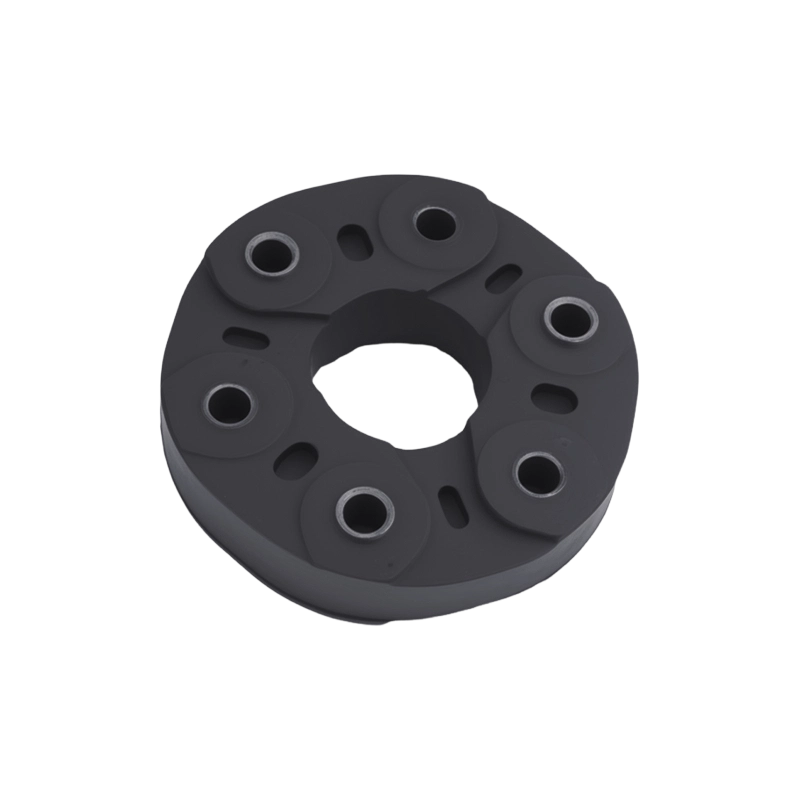


Rubber Driveshaft Coupling (Flex Disc) for Mercedes SL S-Class SLK
-
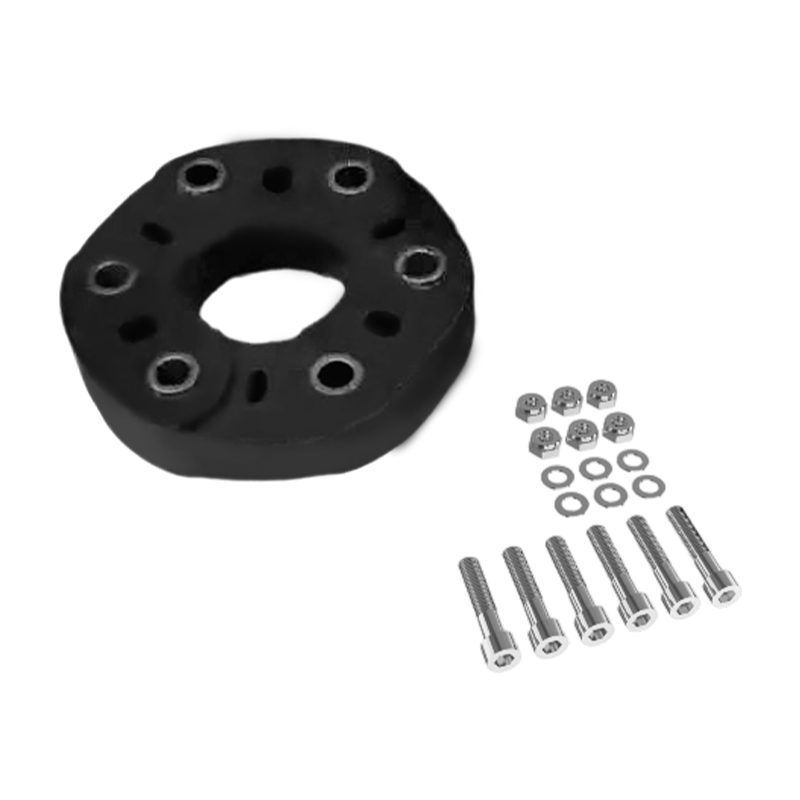
Flexible Driveshaft Coupler Disc Kit for Mercedes W140 / W210
-
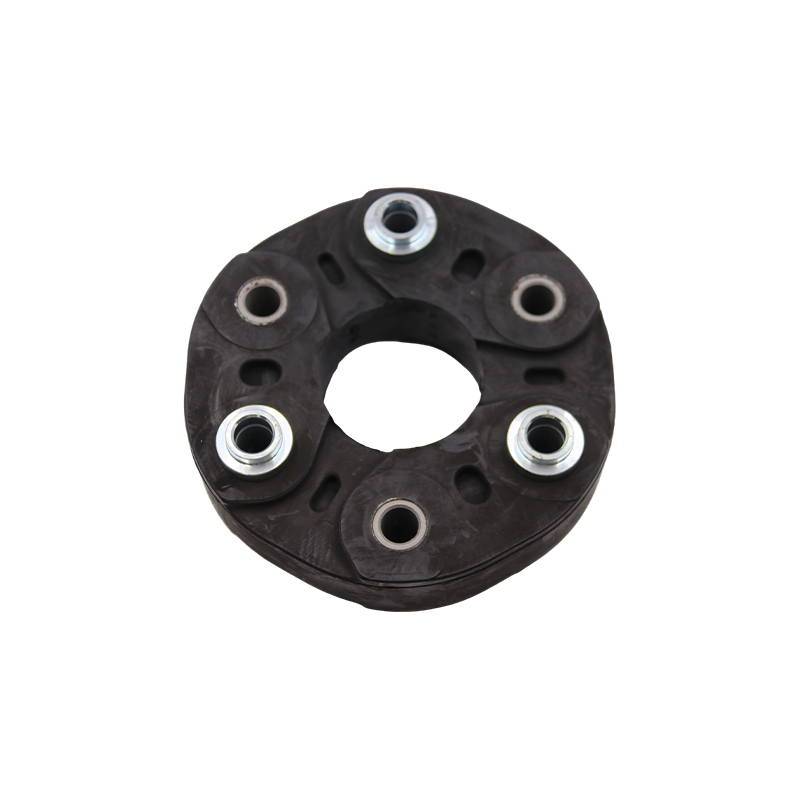
Mercedes-Benz Driveshaft Flex Disc Vibration Absorber Torque Buffer Rubber
-
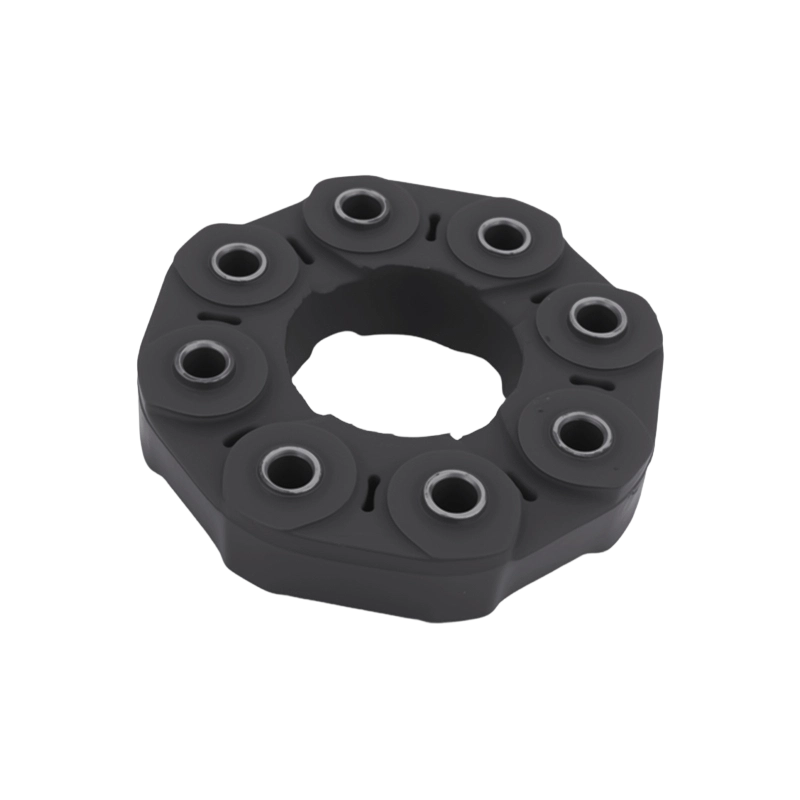
Flexible Drive Shaft Disc for Mercedes C-Class T-Model S204
-
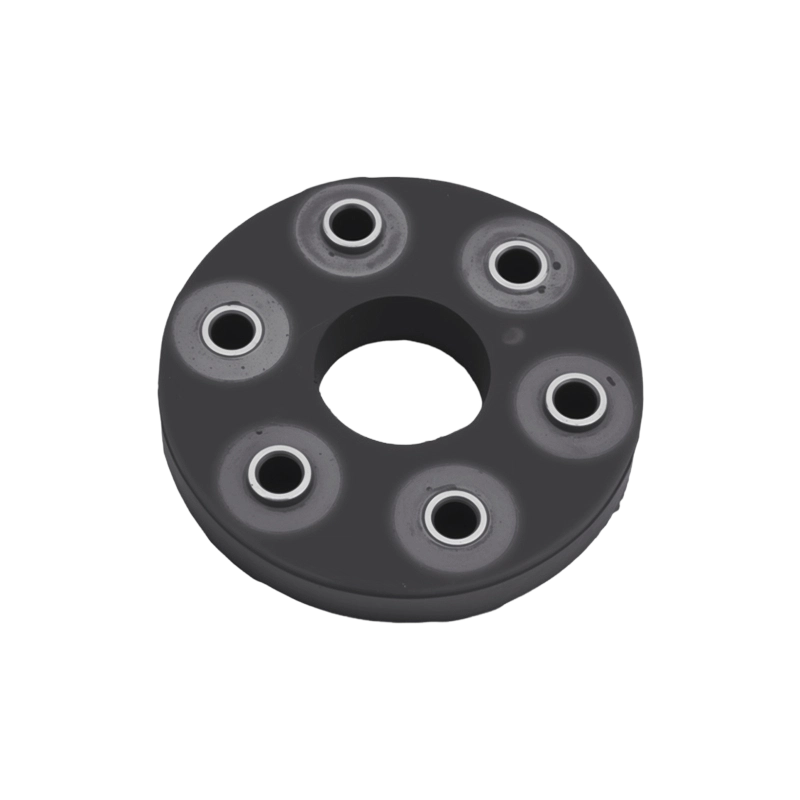
Mercedes W114 Flexible Driveshaft Coupler Rubber Disc
-
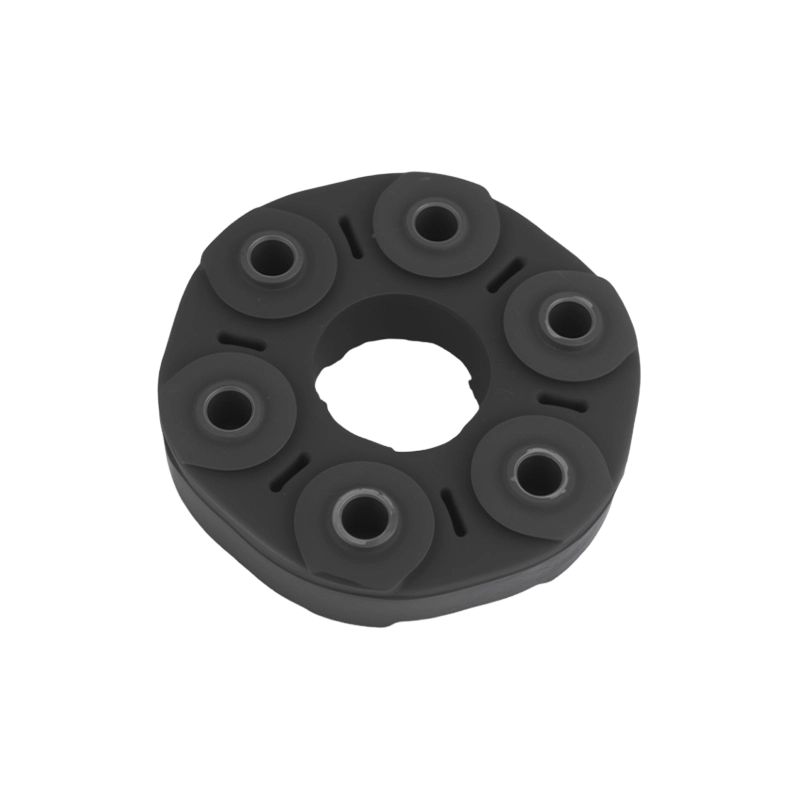
Flexible Driveshaft Coupling Disc Kit for Mercedes C-Class W203/S203
Recommended News
- Address : Yihuang line, Ningguo Economic and Technological Development Zone. Xuancheng City,Anhui Province.
- Fax : +86 13906874997
- Tel: +86-15856310524
- Email: [email protected]
Copyright © ANHUI LIANJUN RUBBER TECHNOLOGY CO., LTD.
All Rights Reserved.
Wholesale Automotive Suspension Parts Suppliers
