
 Español
 عربى
عربى

Symptoms of Worn Mercedes-Benz & BMW Suspension Bushings: When Is It Time for a Replacement?
Content
- 1 How Suspension Bushings Function in Daily Driving
- 2 Common Symptoms That Signal Bushing Wear
- 3 Rubber Versus Hydraulic Bushings: A Structural Comparison
- 4 Diagnostic Flow for Identifying Bushing Failure
- 5 Wear Progression Across Mileage Intervals
- 6 Inspection Checklist for Front and Rear Suspension Arms
- 7 When Replacement Becomes Necessary
- 8 Practical Maintenance Tips to Extend Bushing Life
- 9 Making an Informed Replacement Decision
- 10 Frequently Asked Questions
- 10.0.1 Q1: How can I tell if a suspension noise is coming from a bushing rather than a shock absorber?
- 10.0.2 Q2: Is it safe to keep driving with a worn suspension bushing?
- 10.0.3 Q3: Do all four corners of the suspension need new bushings at the same time?
- 10.0.4 Q4: Can a worn bushing cause a check engine or stability control warning light?
- 10.0.5 Q5: How long does a professional bushing replacement typically take?
How Suspension Bushings Function in Daily Driving
Every control arm, sway bar link, and subframe mount on a modern vehicle relies on a bushing to separate metal from metal. These small rubber or hydraulic components absorb road shock, dampen vibration, and allow the suspension to move through its full range of travel without transmitting harsh impacts into the cabin. On Mercedes-Benz Suspension Bushing assemblies and the equivalent components on 3 Series, 5 Series, and X-platform models, the bushing sits at the pivot point of the control arm, acting as both a hinge and a shock absorber at the same time.
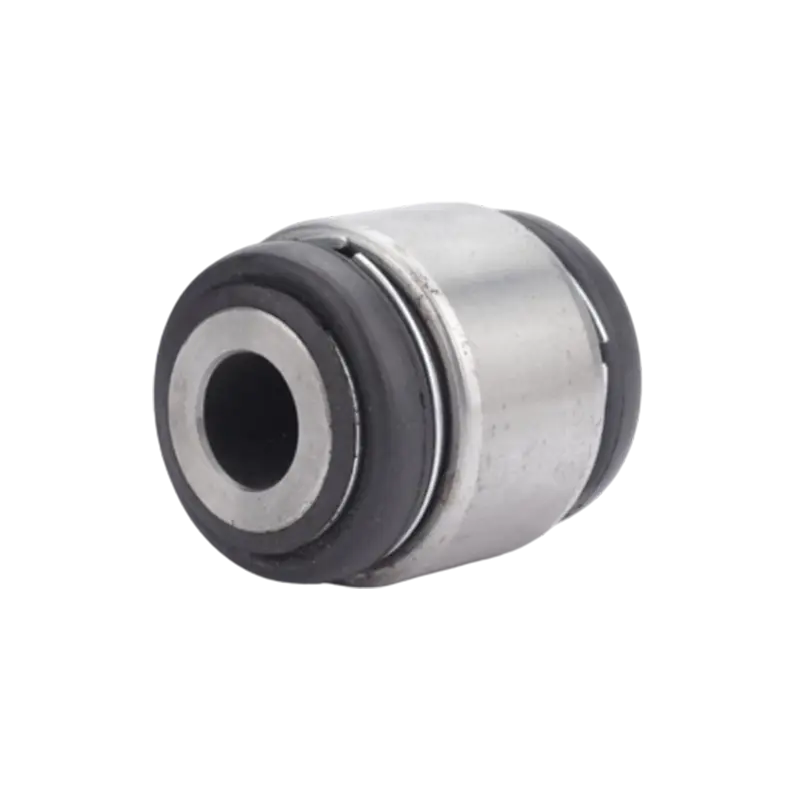
Because the bushing carries dynamic loads from braking, cornering, and vertical wheel travel, its rubber compound is engineered to flex thousands of times per drive cycle without cracking. Over years of service, ozone exposure, road salt, oil contamination, and simple mileage accumulation cause the compound to harden, split, or separate from its outer sleeve. Once that happens, the geometry of the suspension arm is no longer fixed the way the factory intended, and every subsequent symptom on this page traces back to that single point of failure.
Understanding this function matters because bushing wear rarely announces itself with a warning light. It shows up gradually, through noise, feel, and tire condition, which is exactly why a structured diagnostic approach is more useful than guessing at a single loud clunk. Drivers who only react once a noise becomes constant often discover that adjacent hardware, such as ball joints or wheel bearings, has already absorbed months of abnormal load, which turns what should have been a routine bushing swap into a more involved repair.
Common Symptoms That Signal Bushing Wear
Technicians who inspect front and rear suspension arms on a regular basis tend to see the same cluster of complaints repeat across different vehicles and mileage bands. The list below reflects the order in which these symptoms are typically reported during a diagnostic intake.
- Clunking or knocking noise over speed bumps and expansion joints High Priority
- Vibration transmitted through the steering wheel at cruising speed Moderate
- Uneven or accelerated tire wear on the inner or outer shoulder Moderate
- Steering wander or a vehicle that drifts without driver input High Priority
- Alignment settings that will not hold after a curb strike or pothole impact High Priority
- A harsh or hollow knocking sound specifically during slow-speed turns Moderate
Symptoms tagged as high priority generally indicate that a bushing has already progressed past simple stiffening into structural cracking or separation, and vehicles showing more than one high priority symptom at once should be scheduled for inspection promptly rather than waiting for a routine service interval.
The chart below summarizes how frequently each symptom appeared across a sample of suspension diagnostic reports. Clunking noise and turning-related knock dominate the complaint list, which lines up with the fact that a worn bushing loses its ability to control arm movement long before it fails completely.
Fig 1. Share of diagnostic visits where each symptom was the primary complaint.
None of these symptoms is exclusive to a worn bushing on its own, which is why experienced technicians always confirm findings with a physical inspection before ordering parts. A vibration at speed can also point to a wheel balance issue, and tire wear can stem from an alignment problem that has nothing to do with the bushing itself. The pattern across multiple symptoms, rather than any single one, is what points reliably toward bushing failure.
Rubber Versus Hydraulic Bushings: A Structural Comparison
Not all suspension bushings are built the same way, and the material choice directly affects how a vehicle rides, how long the part lasts, and how much a full arm assembly costs to replace. Three general categories cover the vast majority of applications found on daily-driven European sedans and crossovers.
| Bushing Type | Noise Isolation | Typical Service Life | Relative Cost |
|---|---|---|---|
| Solid Rubber | Moderate | 60,000 to 90,000 km | Low |
| Polyurethane | Lower | 100,000 to 150,000 km | Medium |
| Hydraulic (Fluid-Filled) | High | 70,000 to 100,000 km | High |
The radar chart below plots these three categories against five performance attributes on a ten-point scale. Hydraulic bushings dominate noise isolation and ride comfort because the internal fluid chamber absorbs high-frequency vibration before it reaches the chassis, while polyurethane leads on durability and load handling because the denser compound resists tearing under repeated compression.
Fig 2. Comparative scoring across five performance criteria, ten-point scale.
Because BMW Suspension Bushing assemblies on rear-wheel-drive platforms frequently use a hybrid rubber-and-hydraulic design at the front lower control arm, replacement parts should match the original construction rather than defaulting to a generic rubber substitute, which can change steering feel and increase road noise even when the fitment is technically correct. Buyers comparing replacement options should ask specifically whether a part reproduces the original hydraulic chamber or substitutes a simpler solid design, since the two will feel noticeably different on the road even though both may be marketed under the same general product category.
Diagnostic Flow for Identifying Bushing Failure
A methodical inspection sequence prevents misdiagnosis and avoids replacing parts that are not actually at fault. The flow below reflects the order most shops follow when a customer reports any of the symptoms covered earlier.
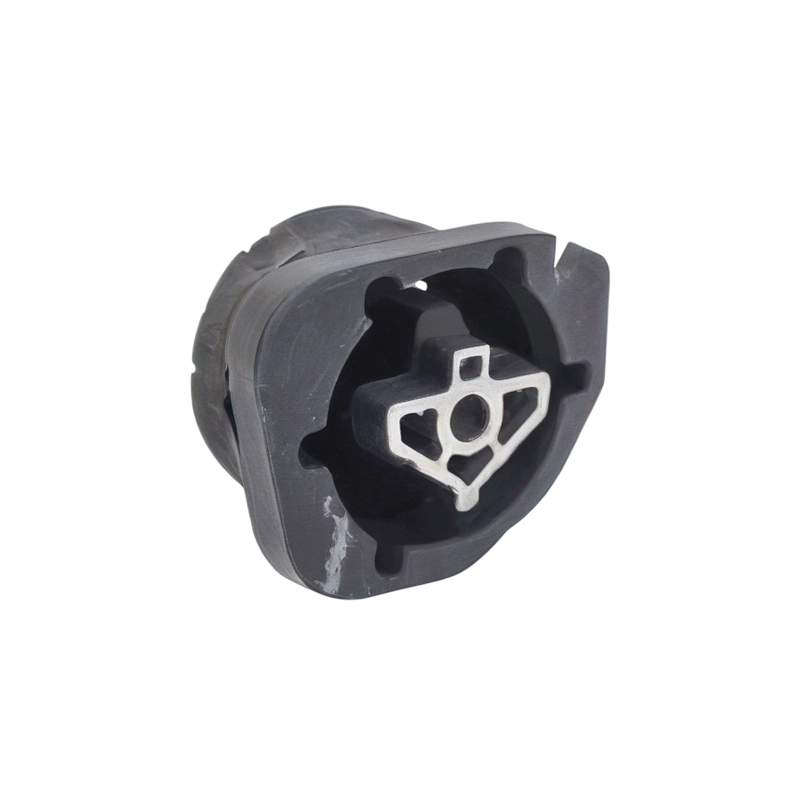
Fig 3. Standard five-stage diagnostic sequence for suspension bushing complaints.
The visual inspection stage looks for cracking, splitting, oil contamination, or a bushing that has visibly separated from its outer metal sleeve. The bounce and load test involves rocking the vehicle at each corner while an assistant watches or listens for clunking at the suspected arm. A road test then confirms whether the noise or vibration reproduces under real driving loads, since some looseness only appears under braking or cornering forces that a stationary test cannot replicate. The alignment check matters because a bushing with excessive play allows the control arm to shift position, which shows up as camber or toe readings that will not hold even immediately after a fresh alignment.
A fresh alignment that will not hold within a few hundred kilometers is one of the most reliable indicators of bushing failure available to a technician, and it often surfaces before any audible noise becomes noticeable to the driver.
Wear Progression Across Mileage Intervals
Bushing degradation is not linear. Early mileage produces only minor stiffening of the rubber compound, but wear accelerates sharply once the material begins to crack internally, since each new crack increases the surface area exposed to oxygen and road contaminants.
Fig 4. Estimated cumulative wear percentage against distance traveled, based on average driving conditions.
By 60,000 kilometers the average bushing has lost roughly a third of its original stiffness, which is usually still within a tolerable range for ride quality. Between 90,000 and 120,000 kilometers, wear accelerates into the range where symptoms become noticeable to the average driver, and by 150,000 kilometers most bushings on vehicles driven in harsh climates or on rough roads have exceeded the point where replacement should be deferred any further. Vehicles used primarily for short city trips with frequent stop-and-go steering input tend to reach these thresholds earlier than highway-dominant driving patterns, because sharp low-speed steering angles place more twisting load on the bushing than steady-state highway cruising.
Inspection Checklist for Front and Rear Suspension Arms
A thorough inspection covers every bushing location on the vehicle, not just the one closest to the reported noise, since a worn bushing on one side often accelerates wear on the opposite corner through uneven load distribution.
| Component | Inspection Method | Sign of Wear |
|---|---|---|
| Front Lower Control Arm Bushing | Pry bar leverage test | Visible play, cracking |
| Front Upper Control Arm Bushing | Visual and manual flex check | Separation from sleeve |
| Rear Trailing Arm Bushing | Bounce test at rear corner | Clunk on compression |
| Sway Bar End Link Bushing | Hand-applied side-to-side force | Rattle at idle speed |
| Subframe Mount Bushing | Torque wrench check plus visual | Hardened or split rubber |
Each row on this list corresponds to a distinct failure signature. A pry bar test on the front lower control arm bushing will reveal excessive play if the bushing has separated internally, even when the outer rubber looks intact from the outside. Sway bar end link bushings tend to fail earliest because they see constant small-amplitude motion at every steering input, which is why a light rattling noise at idle or low speed is often the first symptom a driver notices, well before any of the more dramatic clunking sounds appear.
When Replacement Becomes Necessary
Deferring bushing replacement rarely saves money in the long run. A worn bushing changes suspension geometry, and that shift places abnormal load on adjacent components, which accelerates their wear as well.
Fig 5. Estimated relative cost increase for related repairs when bushing replacement is postponed past the recommended service point.
The most significant multiplier shows up in additional component wear, since a loose lower control arm bushing lets the wheel hub assembly and ball joint absorb impacts they were never designed to handle alone. In practical terms, a driver who postpones a bushing replacement for an extra 20,000 kilometers may end up also replacing a ball joint or wheel bearing that would otherwise have lasted the full service interval. Anyone shopping for a suspension arm bushing replacement should treat the job as time-sensitive once alignment settings stop holding, since that is usually the clearest sign that mechanical play has exceeded a safe tolerance.
As a general guide, replacement is warranted immediately when there is visible cracking or separation, when alignment will not hold after being reset, or when a clunking noise is reproducible on demand during a bounce test. Replacement can reasonably wait for the next scheduled service when the only symptom is mild road noise with no measurable play detected during inspection.
Practical Maintenance Tips to Extend Bushing Life
While bushings are a wear item with a finite service life, several habits measurably slow the rate of degradation and help a vehicle owner get closer to the upper end of the expected mileage range rather than the lower end. Most of these habits cost nothing beyond a small amount of driver attention, yet they compound significantly over tens of thousands of kilometers of use.
- Avoid driving through deep potholes at speed, since sharp vertical impacts create the microtears that eventually grow into full cracks
- Have the alignment checked after any curb strike, even if no immediate symptom is noticed
- Keep the undercarriage free of accumulated road salt during winter months, since salt accelerates rubber and metal sleeve corrosion
- Address a worn sway bar end link promptly, since it is the least expensive bushing to replace and the first to fail
- Request a physical bounce test at every routine service interval rather than relying on a visual glance alone
None of these habits eliminate the need for eventual replacement, but together they can meaningfully extend the interval between services and reduce the likelihood of a bushing failing unexpectedly between scheduled inspections. Combining these habits with the inspection checklist covered earlier gives most owners a realistic path to reaching the upper end of the expected service life range rather than falling well short of it due to preventable damage.
Making an Informed Replacement Decision
Suspension bushing wear is a gradual process, but the symptoms it produces tend to overlap with several other common suspension and steering issues, which is why a structured approach built on physical inspection, a bounce test, and a road test consistently outperforms guessing based on noise alone. Owners who track when a vehicle first begins showing mild symptoms, such as light rattling from a sway bar end link, put themselves in a much better position to schedule replacement proactively rather than reacting to a sudden alignment failure or a loud clunk that appears without warning.
For vehicles regularly driven on rough surfaces, through harsh winters, or primarily in stop-and-go city traffic, it is reasonable to move inspection intervals earlier than the general mileage guidance suggests, since these conditions consistently accelerate the wear curve described earlier in this guide. Matching any replacement part to the original bushing construction, whether solid rubber, polyurethane, or hydraulic, also preserves the ride characteristics the vehicle was originally engineered to deliver, rather than introducing an unexpected change in road feel or cabin noise.
Frequently Asked Questions
Q1: How can I tell if a suspension noise is coming from a bushing rather than a shock absorber?
A bushing-related noise is typically a sharp clunk or knock tied to a specific wheel movement, such as turning or crossing an expansion joint, while a worn shock absorber more often produces a continuous bouncing or floating sensation over a series of bumps rather than a single distinct sound. Listening for the noise while an assistant gently rocks the corner of the vehicle by hand, with the engine off, is usually enough to separate the two possibilities before any parts are ordered.
Q2: Is it safe to keep driving with a worn suspension bushing?
Short-term driving is usually possible, but a worn bushing allows uncontrolled arm movement that can affect steering precision, especially during emergency maneuvers, so replacement should not be delayed once play is confirmed during inspection.
Q3: Do all four corners of the suspension need new bushings at the same time?
Not necessarily, since wear often varies by corner depending on road exposure and driving style, but many shops recommend replacing bushings on an axle in pairs to maintain even handling balance side to side, since a fresh bushing on one corner paired with a worn one on the opposite corner can create an uneven steering response that some drivers find more noticeable than the original symptom.
Q4: Can a worn bushing cause a check engine or stability control warning light?
Indirectly, yes, since severe suspension play can affect wheel speed sensor readings or steering angle sensor accuracy, which some stability control systems interpret as a fault condition even though the root cause is mechanical rather than electronic.
Q5: How long does a professional bushing replacement typically take?
A single control arm bushing replacement generally takes between one and two hours per side depending on corrosion at the mounting bolts, while a full set across multiple locations can extend a service visit to a half day.
Recommended Products
-


Suspension Strut Support Bearing for Mercedes-Benz 903 Series
-
Mercedes R-Class Suspension Replacement Bushing
-
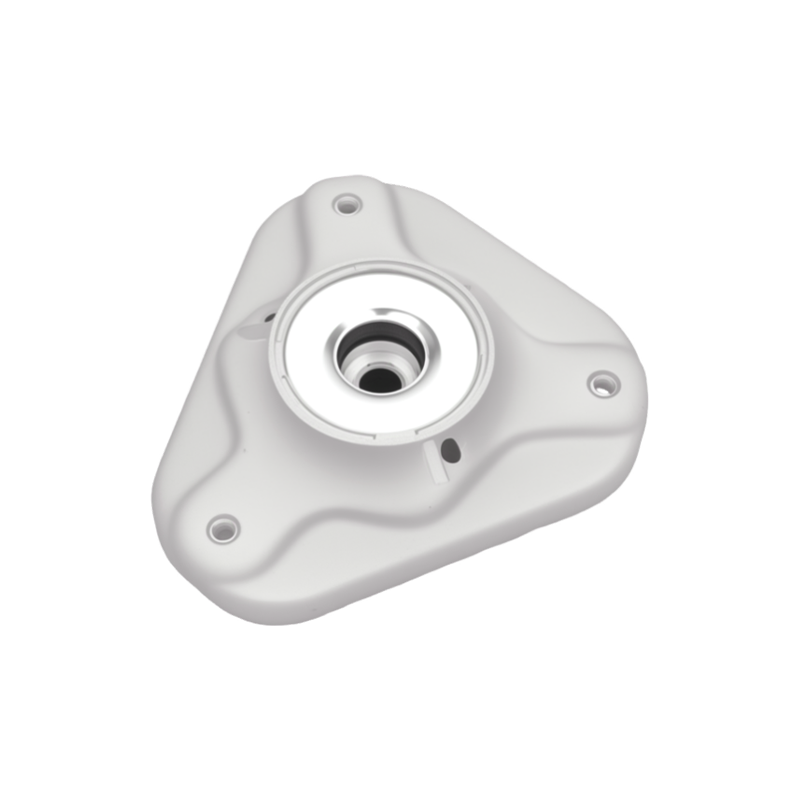
Mercedes-Benz Imported E-Class Suspension Strut Mount
-
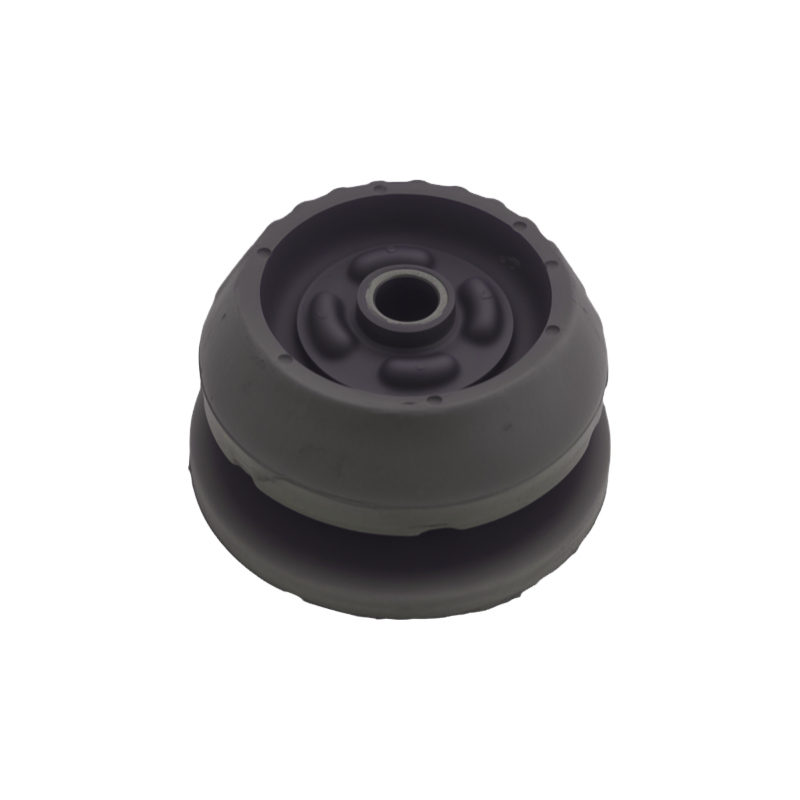
Mercedes-Benz W639 Vito Chassis Suspension Strut Mount
-
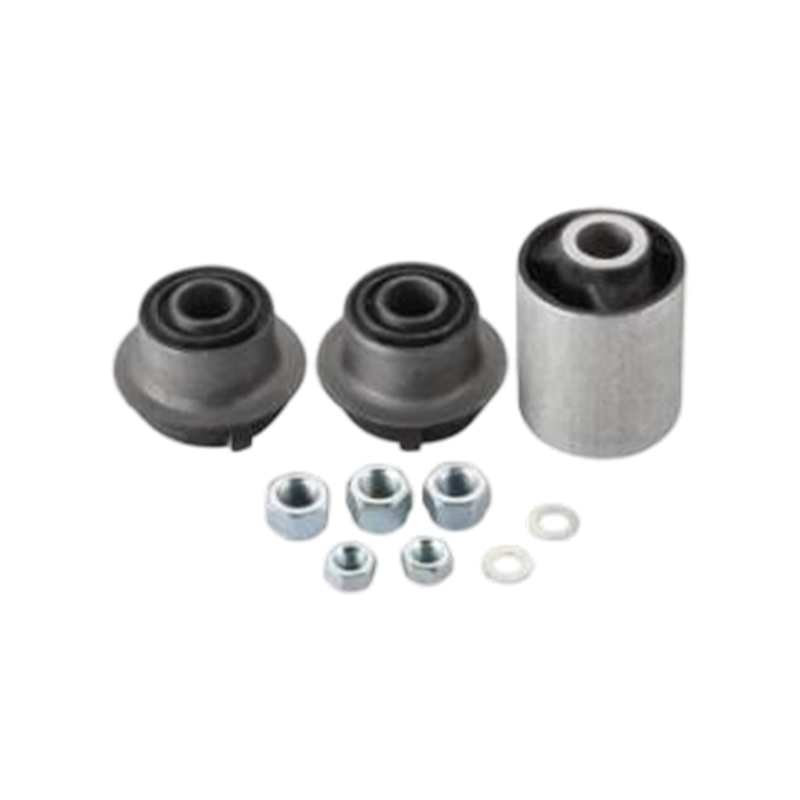
Mercedes-Benz C/E/S/SLK Class Suspension Bushing Kit
-
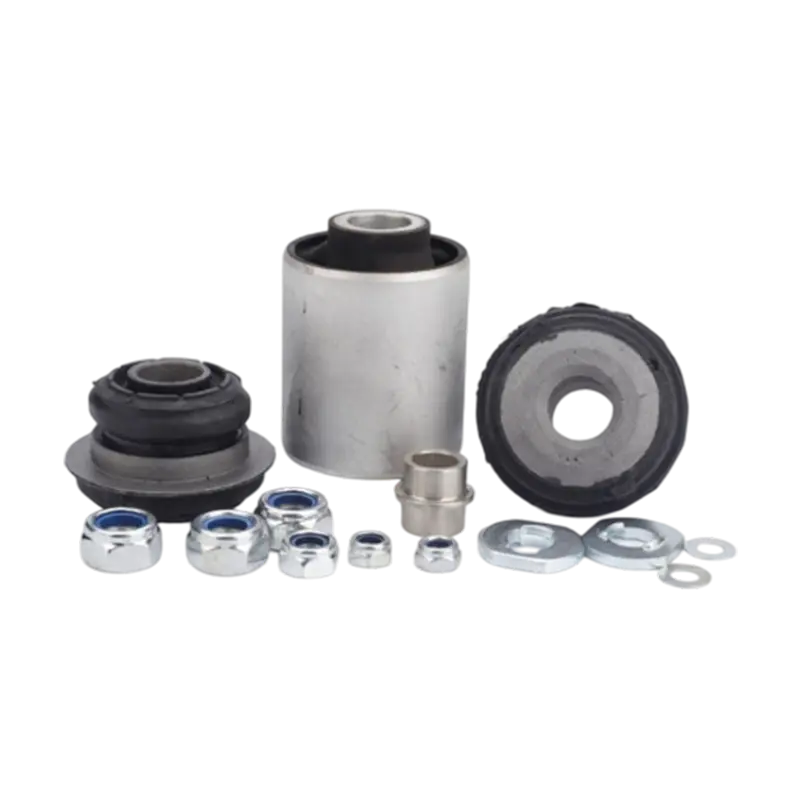
Mercedes-Benz W202 Suspension Bushing Repair Kit
Recommended News
-
Upgrading Your BMW & Mercedes-Benz Suspension: Why Strut Mounts and Bushings Matter for Handling
-
A Comprehensive Sourcing Guide for Mercedes-Benz and BMW Suspension Bushings and Strut Mounts
-
The Role of Strut Mounts in Mercedes-Benz and BMW: Common Failure Signs and Solutions
-
What are the benefits of BMW chassis system?
- Address : Yihuang line, Ningguo Economic and Technological Development Zone. Xuancheng City,Anhui Province.
- Fax : +86 13906874997
- Tel: +86-15856310524
- Email: [email protected]
Copyright © ANHUI LIANJUN RUBBER TECHNOLOGY CO., LTD.
All Rights Reserved.
Wholesale Automotive Suspension Parts Suppliers
