
 Español
 عربى


Common Automotive Bushing Failure Causes: Heat, Oil, and Bond Breakdown
Content
- 1 The Five Causes and the Signature Each One Leaves
- 2 Heat, Ozone, and Hydrocarbons: Where the Damage Starts
- 3 Bonding Integrity: The Failure That Starts at the Factory
- 4 Driveline Bushings Fail Under Torque, Not Just Time
- 5 Installation Error and Wrong Specifications: The Preventable Failures
- 6 Confirming the Cause Before You Order Parts
- 7 What to Look For in a Replacement
- 8 Frequently Asked Questions
A 2013 Mercedes-Benz E-Class arrives with two complaints that sound unrelated: the steering wheel shivers at idle, and the front end clunks over broken pavement. The first comes from a collapsed engine mount sitting under an oil leak. The second comes from a control arm bushing whose rubber has separated from its steel sleeve. Same car, same mileage, two completely different causes.
In the Mercedes-Benz and BMW aftermarket, five mechanisms explain most bushing, mount, and flex disc failures: thermal aging, oil and ozone attack, breakdown of the rubber-to-metal bond, mechanical overload, and installation or specification error. Mileage alone is a weak predictor of any of them.
Identify what destroyed the part before ordering a replacement. A new bushing fitted into the same heat, oil, or preload conditions will fail on the same schedule.
The Five Causes and the Signature Each One Leaves
Each mechanism damages rubber differently, so the failed part usually points to its own cause.
| Cause | Typical trigger | Early symptom | Evidence on the bench |
|---|---|---|---|
| Thermal aging | Under-bonnet soak, exhaust and turbo heat | Harsh ride, rising cabin noise | Dry, hard rubber; fine cracks with clean edges |
| Oil and hydrocarbon contact | Leaking valve cover, oil filter housing, ATF or power steering fluid | New softness, vague steering, driveline judder | Swollen, tacky surface; bond line lifting |
| Ozone and UV exposure | Coastal air, long storage, road salt | Chalky surface, then cracking | Cracks running perpendicular to stress |
| Bond failure | Adhesion or moulding defects, press-fit abuse | Clunk on load reversal, shift shock | Rubber peeling off the sleeve; rust creep underneath |
| Overload and impact | Potholes, kerb strikes, oversized wheels | Sudden noise or vibration after one event | Torn or egg-shaped rubber, distorted sleeve |
Heat, Ozone, and Hydrocarbons: Where the Damage Starts
Rubber is organic, and three environmental factors set its service life: heat, ozone, and hydrocarbons. A mount that dies at 45,000 miles in a hot climate is reacting to its surroundings, not to driving style.
Heat accelerates every aging reaction
An exhaust-side engine mount can soak at 80 °C to 110 °C in ordinary city traffic. As a working rule of thumb, each 10 °C rise roughly doubles the rate at which rubber ages, which is why a mount beside a missing heat shield hardens years before its opposite number. Hardened rubber loses compliance, vibration passes into the body, and the bond line at the steel sleeve starts to work loose.
Ozone cracks stressed rubber first
Ozone attacks rubber under tension, starting as fine crazing perpendicular to the stress direction and ending as cracks through the section. Coastal air, long-stored vehicles, and old protective wax layers all speed this up.
Oil and ATF soften the compound
Hydrocarbons do the opposite of aging: engine oil, automatic transmission fluid, and power steering fluid swell natural rubber and turn a firm bushing soft. Familiar patterns include valve cover and oil filter housing leaks dripping onto a left hydraulic engine mount, an output seal spraying a flex disc, and a steering leak saturating a front control arm bushing. Replace the bushing without sealing the leak and the same failure returns within 12 to 18 months.
A hydraulic mount adds one more failure mode: the fluid chamber ruptures, the mount collapses, and idle vibration jumps immediately. There is no partial repair — a leaking hydraulic mount is a finished mount.
 Engine Mount Rubber Insulator for Mercedes-Benz E-Class W212/S212For W212/S212 E-Class, this OE-style rubber mount locks engine position, limits vibration transfer, and resists heat, oil, and aging.View Product →
Bonding Integrity: The Failure That Starts at the Factory
From a manufacturing standpoint, the most common cause of premature bushing failure is bonding integrity — rubber separating from the steel sleeve instead of tearing through the rubber body.
What a durable bond requires
- Grit-blasted or phosphated steel with the correct surface profile; a polished sleeve gives adhesive nothing to grip.
- Correct primer and bonding adhesive, applied inside the adhesive's open time.
- Clean tooling — mould release agent or dust on the insert is enough to create a weak zone.
- Verified cure temperature and time, plus post-cure where the compound requires it.
How to read a bond failure
A correctly bonded bushing tears through the rubber when it fails. When rubber peels away cleanly from the sleeve, with rust creeping under the bond line, the interface was the weak point: water reaches the steel, rust lifts the rubber, and the gap grows with every load cycle. Low-cost parts often pair an undersized sleeve with filler-loaded rubber that reads firm on a durometer yet cracks early. Bond failures are also an installation problem — pressing a bushing by its inner core, or hammering an arm into place, can shear the bond before the car leaves the lift.
Driveline Bushings Fail Under Torque, Not Just Time
The flex disc (guibo) and driveshaft center support bearing carry every torque reversal the driveline produces, and they sit close to exhaust heat and oil seals.
- Flex disc — cracking between the bolt holes, visible cord, or an elongated disc. Symptoms: a thud when selecting drive or reverse, a 40–60 mph vibration, and a rumble under load.
- Center support bearing — the rubber donut sags until the shaft drops a few millimetres, producing a speed-related drone and a clunk over bumps.
Torque alone rarely destroys these parts. Misalignment, a stiff universal joint, a worn output seal, and a missing heat shield do more damage. Install a center support bearing without preloading the rubber and it can fail within months, however good the part was.
 Driveshaft Flex Disc Kit for Mercedes-Benz W201 and W124For W201/W124 models, this flex disc kit supports drivetrain durability and smooth power transmission; correct fit and OE dimensions aid proper installation.View Product →
Installation Error and Wrong Specifications: The Preventable Failures
A large share of "failed" bushings were damaged during the previous repair. The same mistakes repeat in every workshop:
- Tightening control arm and trailing arm bolts with the suspension hanging at full droop. The bushing ends up twisted at ride height and tears within a year. Load the suspension before final torque.
- Pressing a bushing without supporting the arm bore, or driving it in by the rubber instead of the outer sleeve.
- Reusing torque-to-yield bolts, or fitting a wrong-length bolt that clamps the sleeve off-centre.
- Substituting a solid rubber or polyurethane part for a hydraulic mount, or the reverse. The part fits, but NVH behaviour changes.
- Fitting bushings without checking alignment, ride height, and the condition of the dampers and ball joints around them.
There is also a parts decision worth weighing honestly. Pressing a new bushing into a 15-year-old arm with rust and an ovalised bore is a gamble; a complete arm with the bushing already bonded and positioned removes that variable, at a higher parts cost and lower labour cost.
Confirming the Cause Before You Order Parts
- Clean the area first. Oil and road grime hide the fine cracks that separate heat damage from chemical damage.
- Check for leaks above the component: valve cover, oil filter housing, output seal, power steering lines.
- Load the suspension to ride height and pry gently. More than a couple of millimetres of movement, a sleeve rotating in its bore, or rubber separating from steel all mean replacement.
- Assess the whole corner. Worn dampers, ball joints, and wheel bearings produce symptoms owners describe as "bushing noise".
- Compare left and right. A hard cracked mount on one side and a soft swollen one on the other points to two different causes on the same car.
Recognising the symptom pattern before diagnosis saves parts. A short guide to worn suspension bushing symptoms on Mercedes-Benz and BMW models helps workshops separate clunk, vibration, and wander complaints at the service desk.
What to Look For in a Replacement
Buyers who specify by chassis code and OE reference get far fewer comebacks than those who order by model name alone.
OE reference matchChassis codeDurometerBond qualityHydraulic vs solid
- Match the OE number, the chassis code (E46, F30, W204, W211), and the position — left, right, front, rear, upper, lower.
- Confirm construction: hydraulic or solid, bonded or press-in, supplied with bearing and bolts or without.
- Ask for the rubber compound and hardness, and for batch traceability from a plant working to IATF 16949.
- For older cars, complete assemblies cut installation risk; for volume workshops, individual bushings keep cost per repair low.
 Control Arm and Trailing Arm Bushings for Mercedes-Benz W210/S210OE-referenced chassis bushings for W210/S210 E-Class, made with oil- and heat-resistant rubber to restore suspension tightness and reduce play-related noise.View Product →
Frequently Asked Questions
Q1: What is the most common cause of automotive bushing failure?
Thermal aging combined with chemical attack. Heat hardens the rubber, oil or ATF softens it, and both weaken the rubber-to-metal bond. Where a component sits and what leaks onto it matter more than total mileage.
Q2: How long should Mercedes-Benz and BMW bushings last?
Well-protected OE-grade rubber bushings commonly serve 60,000 to 100,000 miles. Engine mounts beside exhaust heat, hydraulic mounts under an oil leak, and flex discs behind a leaking output seal can fail far earlier.
Q3: Can I replace only the rubber bushing instead of the whole arm?
If the arm bore is round, free of deep corrosion, and the correct press tooling is available, yes. On heavily corroded or previously damaged arms, a complete arm with the bushing already installed is the lower-risk choice.
Q4: Does a leaking hydraulic engine mount need anything besides a new mount?
Yes. Find and fix the leak above it, and check the heat shielding. Otherwise the replacement ages on the same accelerated schedule, often within 12 to 18 months.
Bushing failure is rarely a mystery once you know which mechanism left the damage — heat, hydrocarbons, a broken bond, overload, or installation. Diagnosing the cause first is what keeps a repair from coming back.
Anhui Lianjun Rubber Technology manufactures NVH rubber-to-metal components for Mercedes-Benz and BMW chassis systems, covering engine mounts, transmission mounts, driveshaft support bearings, flex disc kits, strut mounts, stabilizer bushings, suspension bushings, and bump stops across roughly 1,000 specifications. The Ningguo plant holds IATF 16949 certification, and samples are available for verification before volume orders. Buyers can review the support, sample, and quotation process for their market.
Recommended Products
-
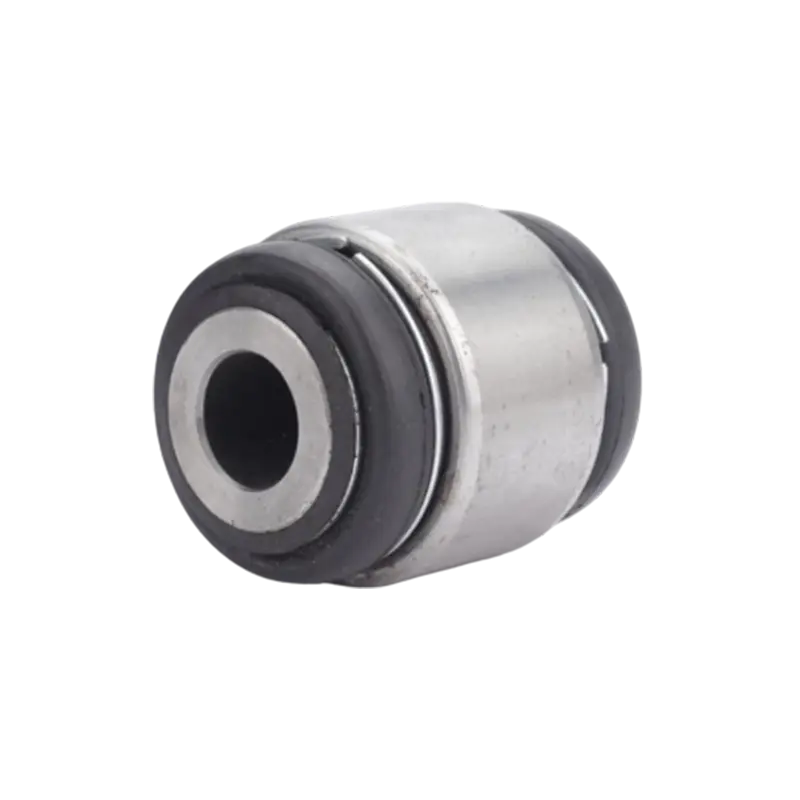


Mercedes W201/W202/W203 Control Arm Bushing Rear Suspension
-
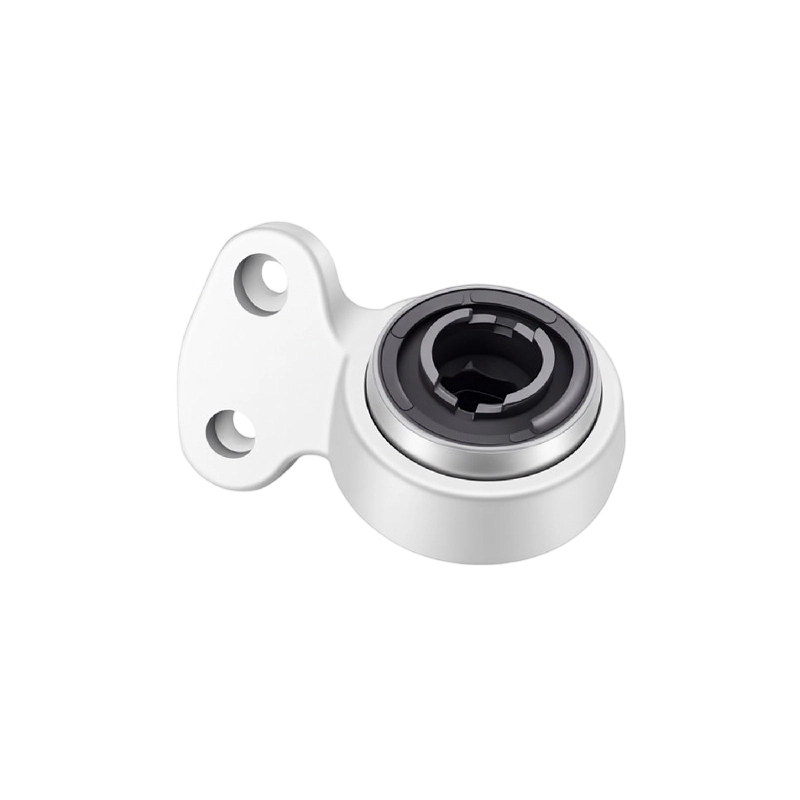
Control Arm/Trailing Arm Bushing for BMW 3 Series Compatible with 237+238
-

Infiniti QX30 Suspension Trailing Arm Bushing
-
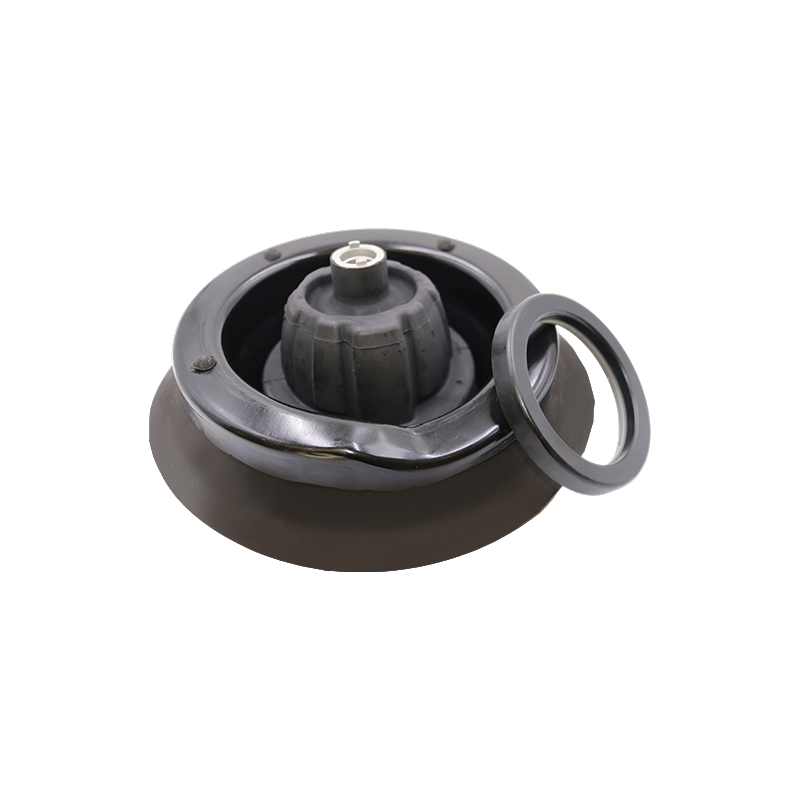
Mercedes-Benz C-Class / CLK-Class Strut Mount Bushing
-

Drive shaft support bearing for MERCEDES SPRINTER2-t bus/3t/4t and VW LT 28-46 II
-

Driveshaft support bearing for Mercedes-Benz and VW commercial vehicles
Recommended News
-
The Role of Strut Mounts in Mercedes-Benz and BMW: Common Failure Signs and Solutions
-
Automotive Rubber Bushing Types Explained: Function, Construction, Material
-
Upgrading Your BMW & Mercedes-Benz Suspension: Why Strut Mounts and Bushings Matter for Handling
-
A Comprehensive Sourcing Guide for Mercedes-Benz and BMW Suspension Bushings and Strut Mounts
- Address : Yihuang line, Ningguo Economic and Technological Development Zone. Xuancheng City,Anhui Province.
- Fax : +86 13906874997
- Tel: +86-15856310524
- Email: [email protected]
Copyright © ANHUI LIANJUN RUBBER TECHNOLOGY CO., LTD.
All Rights Reserved.
Wholesale Automotive Suspension Parts Suppliers
