
 Español
 عربى


Driveshaft Center Bearing Failure Symptoms: Diagnose Them Before Driveline Damage
Content
- 1 What the Driveshaft Center Bearing Actually Does
- 2 The Symptoms, in the Order They Usually Appear
- 3 What These Symptoms Are Commonly Confused With
- 4 Confirming the Diagnosis in Ten Minutes
- 5 Why the Rubber Fails Before the Bearing Does
- 6 Choosing the Right Replacement for a BMW or Mercedes-Benz
- 7 What Happens If You Keep Driving
- 8 Frequently Asked Questions
- 9 The Short Version
A workshop takes in a 2011 BMW 535i with a complaint that has already survived two wheel balances and one wheel bearing replacement: a low, hollow drone that appears at roughly 45 mph, fades above 60 mph, and never changes when the engine is revved in neutral. The part responsible is bolted to the floor pan, costs less than a pair of tires, and is called the driveshaft center bearing.
Here is the conclusion before the reasoning. A failing center bearing produces noise and vibration that follow road speed rather than engine speed, that peak inside a narrow speed window, usually somewhere between 30 and 70 mph, and that worsen under load, on inclines, or with a full trunk. If your noise tracks engine rpm instead, look at the engine and transmission mounts first.
Diagnostic rule of thumb: road-speed driven, plus a narrow speed band, plus load sensitivity equals driveline, not wheel end. Center bearing, flex disc and shaft balance are the three usual suspects, in that order.
This guide covers the symptoms in the order they normally appear, the parts they are confused with, how to confirm the diagnosis in about ten minutes on a lift, and what to check before ordering a replacement for a BMW or Mercedes-Benz.
What the Driveshaft Center Bearing Actually Does
Most rear-wheel-drive and rear-biased all-wheel-drive BMW and Mercedes-Benz cars run a two-piece propshaft. A splined slip joint near the middle lets the shaft change length as the rear suspension moves, and the center support bearing holds that joint in line with the chassis. It is a small assembly with three wear surfaces that age at different rates: the bracket bolted to the body, the rubber isolator bonded into it, and the sealed bearing that carries the shaft.
Its job splits into three parts:
- Keep the shaft operating angle inside the design window, so both universal joints run without binding or phasing errors.
- Absorb torque reaction and the small fore-and-aft movement of the shaft as the rear axle compresses and extends.
- Stop driveline noise from reaching the cabin floor.
The rubber usually gives up first. Once the isolator cracks, hardens or separates from its steel carrier, the shaft drops a few millimetres and starts orbiting. That orbit is small, often under 1 mm, but at 45 mph it is enough to shake a large panel of sheet metal, which is why the symptom is felt as much as heard.
The Symptoms, in the Order They Usually Appear
Center bearing failure is progressive. Drivers rarely notice stage one. They notice stage three, when the noise becomes embarrassing in a car park with the windows down.
| Symptom | When it appears | What is happening | Priority |
|---|---|---|---|
| Low drone or hum | Steady cruise at 35 to 60 mph, light throttle | Isolator has softened and the shaft is orbiting | Book repair within weeks |
| Buzz through the floor pan and centre console | Highway speed, worse on coarse asphalt | Vibration travelling through the bracket into the body shell | Book repair within weeks |
| Thud or clunk on takeoff or in reverse | Standing start, first gear or reverse | Torn rubber lets the shaft move inside the bracket | Inspect immediately |
| Vibration through shifter and steering wheel | Uphill, full throttle, loaded car | Driveline angle outside the design window under torque | Inspect immediately |
| Metallic grind or squeal at low speed | Idle creep, first metres of movement | Bearing race dry, pitted or partly seized | Repair before driving further |
| Visible sag, shiny wear marks, black crumbs | Static inspection on a lift | End stage, shaft running metal on metal | Do not drive |
Two details separate a center bearing from almost everything else on this list. First, the noise does not care which gear you are in: hold 45 mph in third, fourth or fifth and it stays the same. Second, the drone often gets louder when you add weight over the rear axle, because that changes the angle the shaft runs at.
Late-stage symptoms are less subtle. A torn isolator lets the shaft knock against the bracket on every standing start, and a dry bearing produces a metallic squeal at walking pace. By that point the universal joints and the transmission output seal are already absorbing damage.
What These Symptoms Are Commonly Confused With
Wheel bearings and tire balance
Wheel bearing noise usually changes when you load that corner in a turn and is often loudest at 20 to 40 mph. Tire balance problems show a steering wheel shimmy in a different speed band and change after a rotation. Neither one produces a buzz centred on the transmission tunnel.
The flex disc, or guibo
The rubber coupling at the gearbox output fails in a similar way for a similar reason, and both parts are often worn at the same time. Look for radial cracks between the bolt holes and any cord or fabric showing through. A cracked flex disc adds a rotational shudder on takeoff that a center bearing on its own does not produce.
 BMW E90 Driveshaft Flexible Coupling for Drivetrain VibrationThis rubber-and-alloy flex disc fits BMW E90 and listed models and can address drivetrain shudder from a cracked coupling.View Product →
Engine and transmission mounts
If the vibration changes with engine rpm in neutral, or appears when you blip the throttle at a standstill, the driveline is probably not the source. Collapsed engine or gearbox mounts also shift the driveline angle, which is exactly why they accelerate center bearing wear.
Suspension bushings and rear subframe mounts
Worn chassis rubber clunks over expansion joints and makes the steering feel vague, rather than producing a speed-specific drone. The aging mechanism, however, is identical: heat, ozone, oil and load cycles. Our suspension bushing wear symptoms checklist explains where chassis noise and driveline noise overlap, and why replacing one without the other rarely fixes the complaint.
Confirming the Diagnosis in Ten Minutes
You do not need a vibration analyser for this job. A lift, a torch and a pry bar settle the question in most cases.
- Inspect the isolator around the bracket for cracks, tears or separation from the steel carrier. Light surface checking is normal on a fifteen-year-old part; deep splits are not.
- Grip the propshaft next to the centre joint and push it up, down and sideways. A healthy assembly moves very little. Free play of several millimetres means the rubber or the bearing is finished.
- Rotate the shaft by hand. Roughness, a dry rasp or any sticking point points to a failing bearing race.
- Check both universal joints for play and inspect the flex disc for radial cracks.
- Check the bracket bolts and the body mounting points. A loose bracket mimics the same noise and costs nothing to fix.
- Road test at the speed where the noise appears, then repeat with the gearbox in neutral at different engine speeds. If the noise survives the rev change, the driveline is confirmed.
Why the Rubber Fails Before the Bearing Does
The bearing itself is sealed and is often still serviceable when the rubber around it has already collapsed. Heat from the exhaust and the transmission tunnel, ozone, oil mist from a weeping output seal and road salt all attack the bond between rubber and steel. Mileage is only half the story: a car parked outdoors in a hot climate can need a center bearing at 70,000 miles, while a garaged example may pass 130,000 miles on the original part.
Two conditions shorten that life dramatically. A missing or bent heat shield bakes the isolator from above. A sagging transmission mount or worn universal joints change the shaft angle and load the bearing in a direction it was never designed to take.
Choosing the Right Replacement for a BMW or Mercedes-Benz
Model names are not enough. The same 5 Series generation can use different center support assemblies depending on whether the car is rear-wheel drive or xDrive, and a W203 part will not fit a W204. Order by chassis code and driveline type, not by the badge on the boot lid.
- Chassis code first: E46, E90, F10, F07 and X5 E53 differ from W202, W203, W204, W210 and W205 in bracket height and isolator shape.
- Rear-wheel drive versus AWD: 4MATIC and xDrive shafts are shorter, and the bracket geometry changes with them.
- Bearing only or complete assembly: pressing a new bearing into an old isolator usually ends in a comeback. Complete rubber-to-metal assemblies cost a little more and take minutes to fit.
- Rubber quality: reclaimed compound hardens within a season or two. Properly bonded natural and synthetic blends hold their damping curve far longer.
- Hardware: bolts, washers and spacers should be in the box, and the flex disc is worth replacing in the same visit.
For BMW applications, check whether the assembly carries the bracket and whether the vehicle is xDrive, then match the OE number cast on the old housing. A rear-drive E53 X5 and an xDrive F15 use very different mounts even though both are described as an X5 center bearing.
 BMW X5 E53 Driveshaft Center Support BearingFor BMW X5 E53, this center support bearing with 30 mm inner diameter uses listed OE numbers to help reduce drivetrain vibration.View Product →
For Mercedes-Benz, the same discipline applies across the C-Class and E-Class families: W202 and S202 estates, W203 and W204 saloons and W210 and W211 all have their own bracket and isolator dimensions. Vans and commercial platforms such as the Sprinter 906 and Vito W639 use heavier bearings because they carry considerably more load and far more torque.
 Mercedes-Benz C-Class W202 S202 Driveshaft Center Support BearingFits Mercedes-Benz C-Class W202/S202 with 25 mm inner diameter and helps reduce drivetrain vibration while limiting wear on related components.View Product →
What Happens If You Keep Driving
Rubber does not heal. Once the isolator tears, every standing start hammers the shaft into the bracket, and that load travels into parts costing far more than the bearing itself: universal joints, the flex disc, the transmission output bushing and seal, and eventually the pinion bearings in the differential.
The extreme outcome is a propshaft that leaves its support at speed. It is rare, but the fuel and brake lines routed along the tunnel were never designed to survive a spinning shaft. On a working Sprinter that decision affects a business, not just a weekend car.
Frequently Asked Questions
Q1: How long can I drive with a bad center bearing?
If the only symptom is a drone at highway speed, most workshops would still recommend repair within a few weeks. As soon as you hear a clunk on takeoff or a metallic squeal, stop driving and have the shaft supported and inspected.
Q2: Does a failing center bearing always make noise?
No. Some failed isolators show up only as vibration through the floor and seats, or as a knock when reversing. In well-insulated cabins the first clue is often a passenger asking why the floor hums on the motorway.
Q3: Is the center bearing the same as the flex disc?
No. The flex disc is the rubber coupling at the gearbox or differential end of the shaft. The center bearing supports the middle of a two-piece shaft. They fail for comparable reasons and are frequently replaced in the same job.
Q4: Do I need a wheel alignment after replacing it?
Not a wheel alignment, but the bracket position matters. Many assemblies use slotted holes or shims to set the shaft angle. Refit it in the original position and check shaft runout; if vibration persists, a driveline specialist can rebalance the shaft.
Q5: How do I identify the correct part for my car?
Read the chassis code from the VIN plate, confirm rear-wheel drive or all-wheel drive, then cross-check the OE number on the old bracket. Chassis code plus driveline type identifies the part far more reliably than the model name alone.
The Short Version
Center bearing failure announces itself as a road-speed drone inside a narrow speed band, followed by a clunk on takeoff and eventually a metallic grind. Confirm it by checking the isolator for tears and the shaft for free play, then order by chassis code and driveline type rather than by model name.
Lianjun Rubber produces driveshaft center support bearings and driveline rubber components for BMW and Mercedes-Benz chassis, from E36 and W201 through to the G-series and W205, in rubber-to-metal bonded assemblies built to OE dimensions with the bracket, isolator and hardware matched to each platform. If you need to confirm fitment for a specific chassis code, request a sample or a quote and we will verify the assembly against your OE number.
Recommended Products
-


Driveshaft Flex Disc Kit for Mercedes Benz W201 & W124
-

Driveshaft Flex Disc Coupling for Mercedes-Benz C-Class
-

Driveshaft Flex Disc Kit for Mercedes-Benz W210 S202
-

Driveshaft Flex Coupling Disc Kit for Mercedes Sprinter
-

Driveshaft Flex Disc Kit for Mercedes W203 C-Class
-
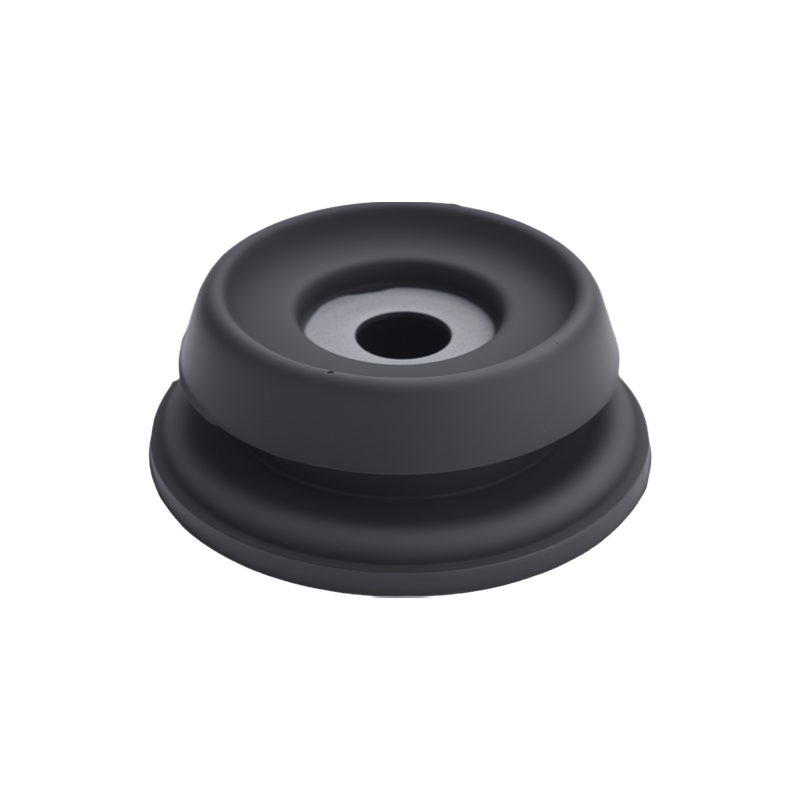
Suspension Strut Support Bearing for Mercedes-Benz 903 Series
Recommended News
-
Center Bearing vs Carrier Bearing: Same Part, Different Name Explained
-
Causes of Driveshaft Center Bearing Wear: Practical Applications, Selection, Performance
-
Symptoms of Worn Mercedes-Benz & BMW Suspension Bushings: When Is It Time for a Replacement?
-
The Role of Strut Mounts in Mercedes-Benz and BMW: Common Failure Signs and Solutions
- Address : Yihuang line, Ningguo Economic and Technological Development Zone. Xuancheng City,Anhui Province.
- Fax : +86 13906874997
- Tel: +86-15856310524
- Email: [email protected]
Copyright © ANHUI LIANJUN RUBBER TECHNOLOGY CO., LTD.
All Rights Reserved.
Wholesale Automotive Suspension Parts Suppliers
