
 Español
 عربى


Center Bearing vs Carrier Bearing: Same Part, Different Name Explained
Content
- 1 One Component, Six Common Names
- 2 Where the Real Differences Start
- 3 What a Center Support Bearing Actually Does
- 4 Why the Rubber Fails Long Before the Bearing
- 5 Matching the Complaint to the Right Component
- 6 A Ten-Minute Inspection That Avoids Guesswork
- 7 Replacement and Fitment: Where Comebacks Come From
- 8 Buying and Stocking: Terms, Numbers and Samples
- 9 Frequently Asked Questions
- 10 The Takeaway
A technician orders a carrier bearing for a BMW X5 E53 and opens a box that contains a small rubber-and-steel bracket with a bearing pressed inside. He expected something that looked like a wheel hub. The order was correct, the part was correct, but the name on the invoice did not match the picture in his head.
The short answer comes first: on a driveshaft, a center bearing and a carrier bearing are the same component. The word changes with country, catalog and workshop habit, and nothing about the function changes with it. The confusion that actually costs money is a different one, between a driveshaft center support bearing and load-carrying bearings such as a differential carrier bearing or a hub carrier bearing.
What follows separates the naming problem from the engineering problem, then covers symptoms, inspection, fitment and buying checks.
One Component, Six Common Names
Search any European or North American parts catalog long enough and the same bracket appears under several different entries:
Every one of them describes the same product family: a metal bracket, a rubber isolator and a sealed ball bearing that supports the middle of a two-piece propeller shaft. US English usually says carrier bearing; UK, Irish and Australian usage says centre bearing; German catalogs write Mittellager. Japanese and Korean listings often use center support or propeller shaft bearing.
A test that works in any language: if the part bolts to the underbody, wraps a ball bearing in rubber, and holds the joint between two shaft sections, all of those names point to the same item.
Where the Real Differences Start
Two other components share the word carrier, and mixing them up produces genuine mistakes:
- Differential carrier bearings sit inside the rear axle housing, support the differential case, and are set with preload shims during a rebuild. They are internal axle parts, not underbody parts.
- Hub or wheel carrier bearings sit in the knuckle or hub, carry the weight of the vehicle and rotate with the wheel. Their noise usually changes with cornering load.
A driveshaft center support bearing carries no vehicle weight at all. It carries shaft weight, sets joint angle and absorbs vibration, which is why it fails for completely different reasons and at a completely different mileage from a hub bearing.
What a Center Support Bearing Actually Does
A one-piece propeller shaft works well up to a point. Push it far beyond two metres on a rear-wheel-drive sedan or SUV and it becomes heavy, difficult to package and prone to whipping at high speed. Long-wheelbase cars, SUVs and vans therefore split the shaft into two sections, join them in the middle, and hang that joint on a rubber-isolated support bolted to the underbody.
Its work breaks down into three parts:
- Carry the shaft section so it does not sag under its own mass.
- Hold the middle joint at a stable angle while the body flexes and the rear axle moves on its bushings.
- Isolate driveline noise from the cabin, which is the job of the rubber element.
On most BMW and Mercedes-Benz applications the bracket sits in slotted bolt holes. The slot lets the technician position the shaft and preload the bearing so the rubber is neither stretched nor compressed at rest. That detail matters again during replacement.
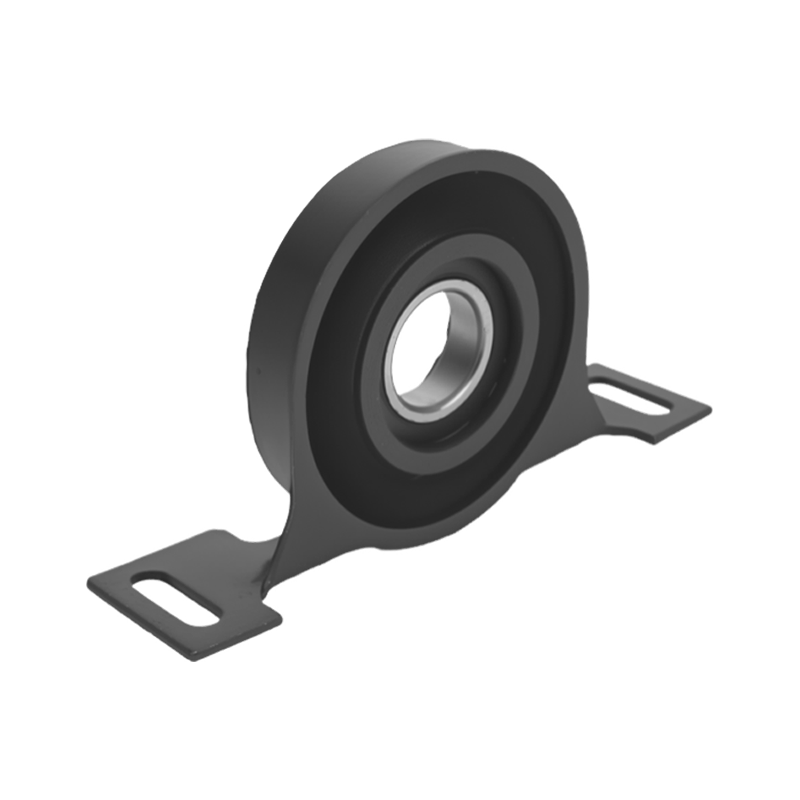 BMW E34 E39 Driveshaft Center Support BearingFits BMW 5 Series E34/E39 and listed 3 Series/Z3 models; 30 mm bore, 55 mm outer diameter, rubber-metal construction for driveshaft support and vibration reduction.View Product →
Why the Rubber Fails Long Before the Bearing
In Mercedes-Benz and BMW aftermarket work, the ball bearing is rarely the first failure. The rubber gives up first, and for predictable reasons:
- Heat from the exhaust and the transmission tunnel bakes the rubber and hardens it.
- Oil mist from a weeping output shaft seal softens and swells the compound.
- Ozone and constant flexing open small cracks that grow into tears.
- An incorrect shaft angle keeps the element under load even when parked.
- Driveline vibration from an unbalanced shaft or a worn flex disc accelerates everything above.
Once the rubber sags or tears, the shaft drops a few millimetres. That is enough to change joint angles, load the universal joint unevenly, and create the low-frequency rumble owners describe as a helicopter noise between roughly 60 and 90 km/h.
Rubber-to-metal parts age in a similar way across the whole chassis, so the symptoms of worn bushings follow the same pattern of noise, vibration and vague handling.
Matching the Complaint to the Right Component
Center bearing rubber sag or shaft balance. Check the rubber for tears and the bracket for movement before condemning the shaft.
Flex disc cracks, universal joint play, or loose center bearing bolts rather than the bearing itself.
Wheel hub bearing. A center bearing does not change tone with steering input.
Driveline balance, incorrect preload in the bracket slots, or a hardened flex disc.
Collapsed engine or transmission mount. Same complaint pattern, different part of the driveline.
Replacing a hub bearing to cure a center bearing complaint is the most expensive way to learn this list.
A Ten-Minute Inspection That Avoids Guesswork
- Raise the vehicle and look at the rubber element first. Cracks, missing chunks and a shiny polished surface all indicate age.
- Twist and lift the shaft by hand. Any visible sag under the support, or free movement the manufacturer did not intend, points to a failed isolator.
- Check the bracket bolt holes for witness marks showing the shaft has shifted.
- Inspect the flex disc for cracks and the universal joint for play before ordering a support bearing.
- Look for an oil trail from the transmission output seal, which explains premature rubber failure.
- Road test at the complaint speed and note whether the noise follows engine rpm or road speed, since the second pattern belongs to the driveline.
Replacement and Fitment: Where Comebacks Come From
The replacement procedure itself is not complicated, but the details decide whether the repair lasts:
- Mark flange-to-flange positions before removal so the shaft goes back in the same relationship.
- Support the shaft sections; do not let them hang on the universal joints.
- Press the bearing in square, with support on the correct shoulder, and keep the bracket facing the original direction.
- Set the preload in the slotted holes exactly as the workshop manual specifies, then torque to specification.
- Road test at the complaint speed, not just around the block.
Fitment is the other half. Bearing bore diameter, housing height, bracket bolt spacing and rubber hardness must all match, and two visually identical brackets can differ by a few millimetres in the wrong places. Order by chassis code and OE reference, then confirm dimensions.
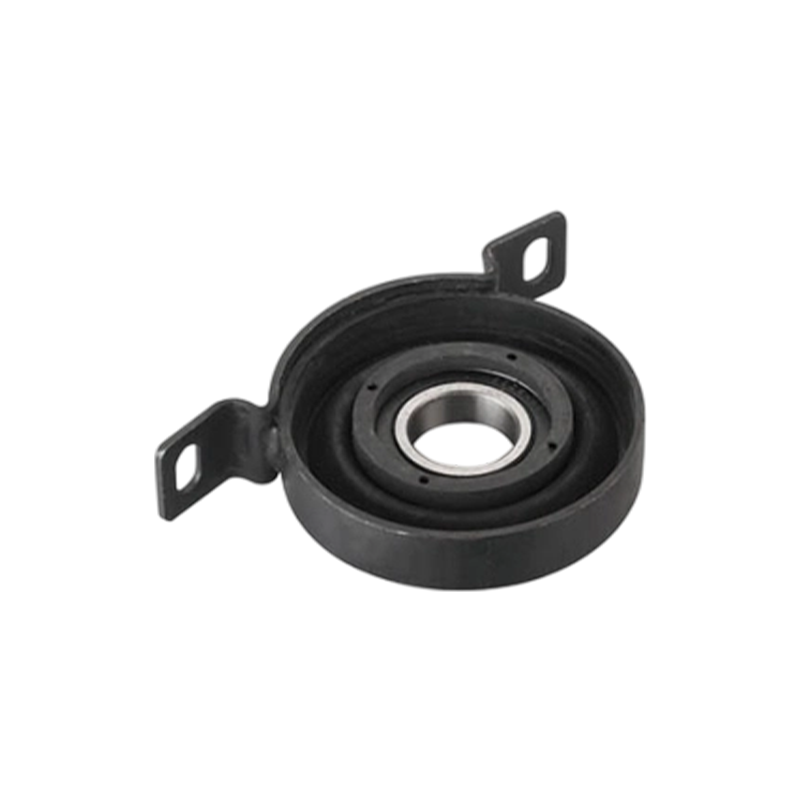 BMW X5 E53 Driveshaft Center Support BearingFor BMW X5 E53 3.0i through 4.8is; OE 26121229726/26127507740, 30 mm bore, rubber and alloy construction to support the driveshaft.View Product →
Buying and Stocking: Terms, Numbers and Samples
For distributors, the terminology problem shows up twice: once in the sales counter conversation and once in the warehouse numbering. If a catalog lists a carrier bearing and a centre bearing as two different SKUs, someone will eventually stock both for the same application.
The reliable method is to index driveshaft support bearings by chassis code and OE number, the way the German applications are normally organised: BMW E34, E39, E46, E60, F10, G30, X5 E53 and F15 on one side, Mercedes-Benz W124, W203, W205, W211, W221 and Sprinter 906 on the other. Cross-referencing a chassis code takes seconds and removes the language question entirely.
When checking a new supplier, ask for sample evaluation before volume orders, confirm the rubber hardness and bore dimensions against the original part, and agree delivery scheduling in writing. A supplier that can support that process from sample evaluation through production support removes most of the risk from this category.
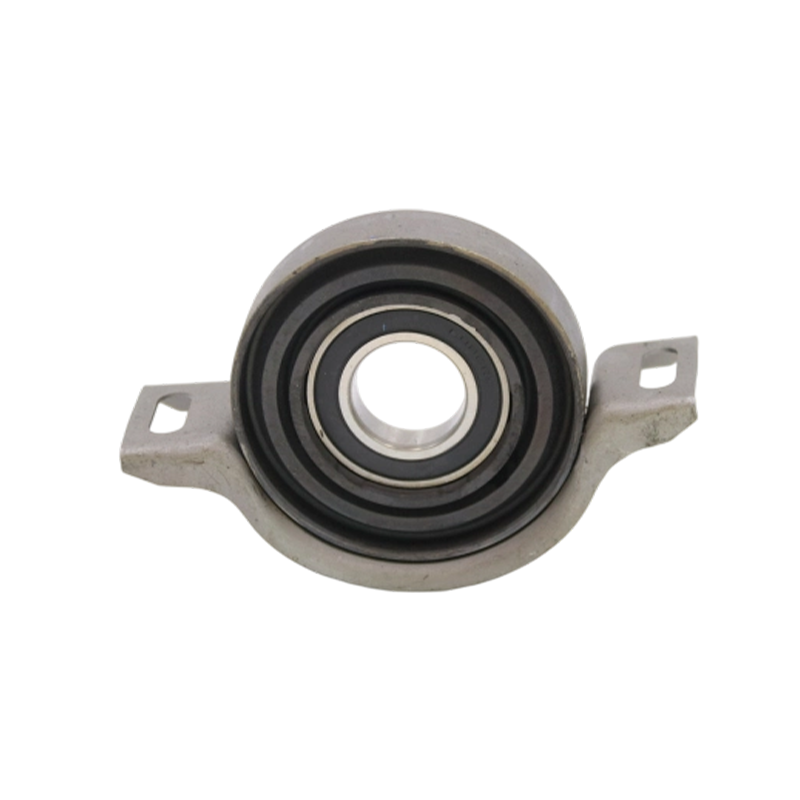 Mercedes-Benz 205 Series Driveshaft Center Support BearingFits Mercedes-Benz 205 series with OE 2054108501; supports the driveshaft, reduces noise and vibration, and uses durable materials for stability.View Product →
Frequently Asked Questions
Q1: Is a center bearing the same as a carrier bearing?
Yes. For a driveshaft, both names describe the same underbody support assembly. The difference is regional vocabulary, not design.
Q2: Is a carrier bearing the same as a wheel bearing?
No. A wheel or hub carrier bearing carries vehicle weight inside the hub. A differential carrier bearing works inside the axle housing. A driveshaft center bearing only supports the shaft.
Q3: What fails first inside the assembly?
The rubber isolator in most cases. Heat, oil and continuous flexing harden and tear it, which then loads the ball bearing and the universal joint.
Q4: Can I keep driving with a worn center bearing?
Briefly, but the sagging shaft changes joint angles and accelerates wear on the flex disc and joints. The noise also tends to worsen quickly at highway speed.
Q5: Does the center bearing need preload?
On most BMW and Mercedes-Benz applications, yes. The bracket slots exist so the assembly can be positioned correctly and torqued per the workshop manual.
The Takeaway
Center bearing and carrier bearing are two labels for one part, so treat the naming question as a catalog problem rather than a technical one. The technical questions worth asking are about shaft configuration, rubber condition, alignment and correct preload. Get those right, order by chassis code and OE number, and the invoice wording stops mattering entirely.
Recommended Products
-
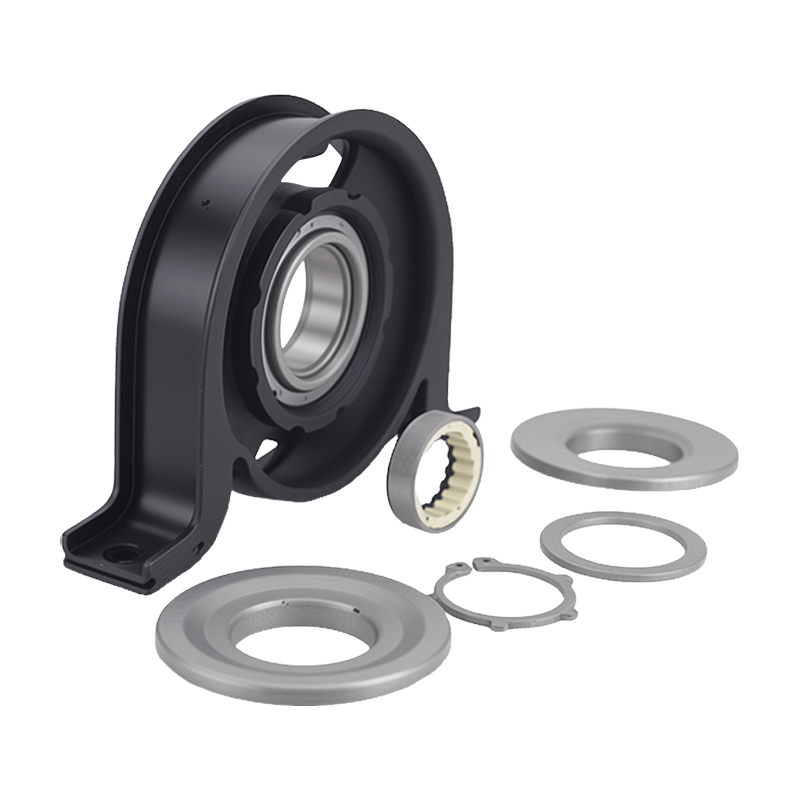


Auto Parts Drive Shaft Rubber Center Bearing for Mercedes-Benz T1/T2 Series
-
Mercedes GLK 350 Strut Mounting Bearing Replacement Part
-
Driveshaft Center Support Bearing for BMW 5 Series
-
BMW X Series AWD Drive Shaft Center Support Bearing
-
Driveshaft Center Support Bearing for BMW E90 5 6 7 Series
-
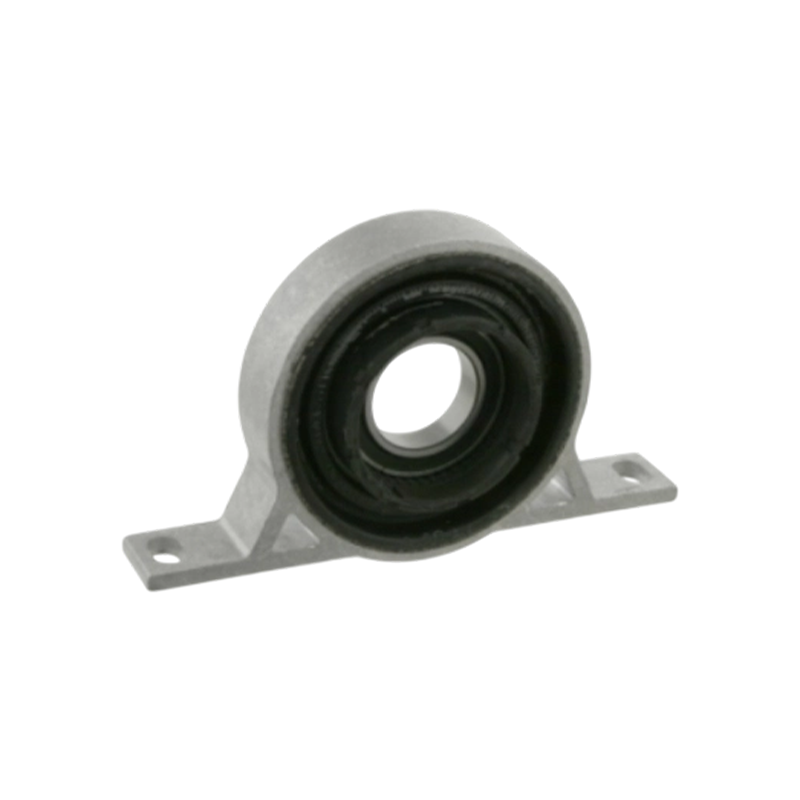
BMW 5 Series 6 Series Drive Shaft Center Support Bearing
Recommended News
- Address : Yihuang line, Ningguo Economic and Technological Development Zone. Xuancheng City,Anhui Province.
- Fax : +86 13906874997
- Tel: +86-15856310524
- Email: [email protected]
Copyright © ANHUI LIANJUN RUBBER TECHNOLOGY CO., LTD.
All Rights Reserved.
Wholesale Automotive Suspension Parts Suppliers
